
What is CPR?
When a person is having a respiratory arrest, the heart can continue to pump for several minutes and circulate oxygen. Without early intervention, respiratory arrest may lead to cardiac arrest.
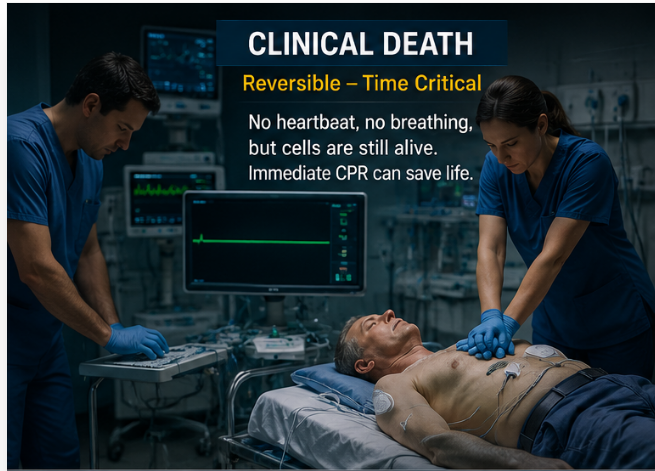
Once cardiac arrest occurs, circulation ceases and vital organs are deprived of oxygen. When respiratory and cardiac arrest occur together, the patient is considered clinically dead. Within 4 to 6 minutes without circulation, brain damage will begin, and after 8 to 10 minutes, the damage is irreversible.
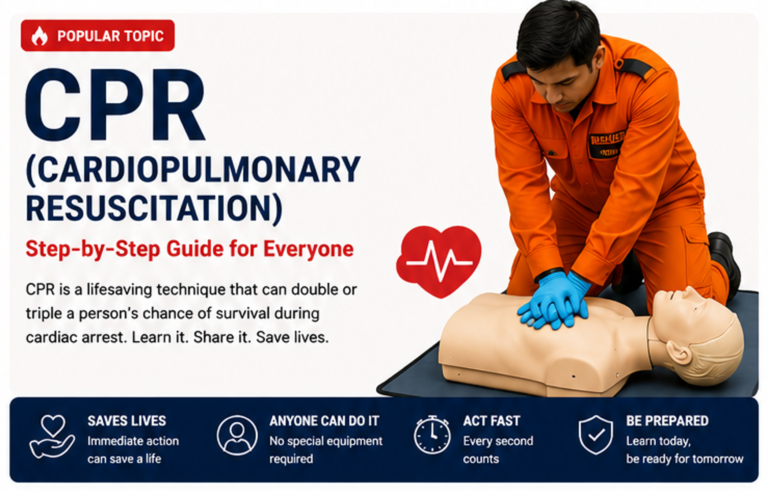
CPR involves a combination of chest compressions and artificial ventilations designed to revive a person and prevent biological death by mechanically keeping a person’s heart and lungs working.
What is Clinical death and Biological death?
Clinical death- It occurs when a patient is in respiratory arrest (not breathing) or in cardiac arrest (heart not beating).The patient has a period of 4 to 6 minutes to be resuscitated without brain damage. In simple meaning, vital organs below neck region stopped working. Clinical death can be reversed.
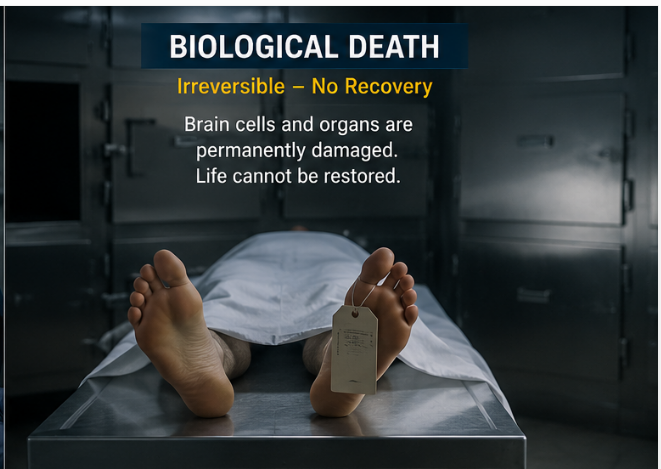
Biological death- The moment the brain cells begin to die due to absence of air and blood circulation, it leads to biological death, which cannot be reversed.
So, Rescuer or bystanders/first responder has precious 4-6 minutes of time to save life by giving proper CPR.
EXCEPTION: In Cold-water drownings- There have been cases of persons resuscitated one hour or more after cold-water drowning. In these cases, victims should receive prolonged resuscitative efforts. In a cold environment, a person should not be considered dead until the victim’s body is warmed.
What is Chain of Survival?
Cardiopulmonary resuscitation (CPR) can save the lives of victims in cardiac arrest. Two-thirds of heart attack victims(due to heart disease) die outside the hospital, most within two hours of the onset of symptoms.
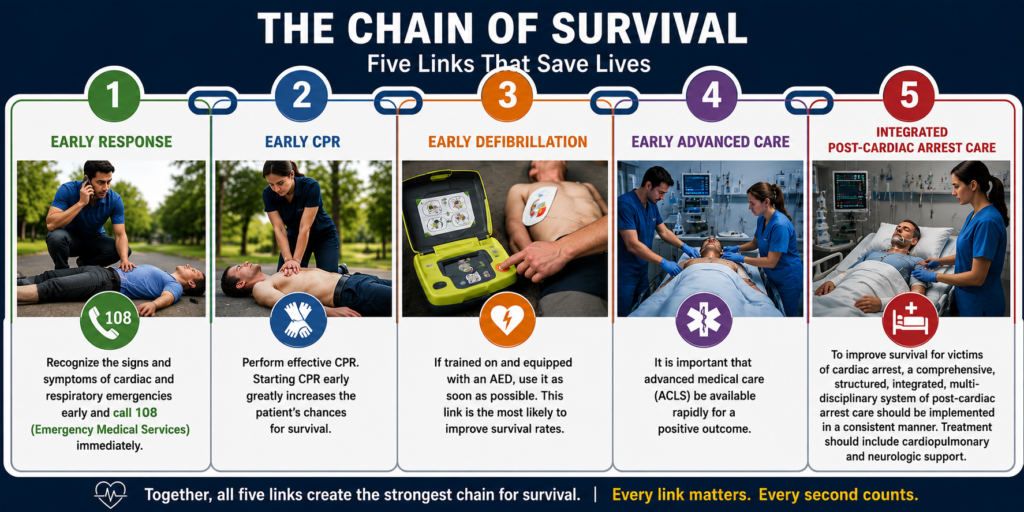
Though CPR itself is not enough to save the life of a victim of heart attack, it is a vital link in the chain of survival. The “Chain of Survival” has five links (According to the American Heart Association, 2015 Guidelines), and the patient’s chances for surviving are the greatest when all the links come together.
The five links are as follows:
1) Early access: Recognize the signs and symptoms of cardiac and respiratory emergencies early and notify Emergency Medical Services.
2) Early CPR: Perform effective CPR. Starting CPR early greatly increases the patient’s chances for survival.
3) Early defibrillation: If trained on and equipped with an automated external defibrillator (AED), use it as soon as possible. This link is the most likely to improve survival rates.
4) Early advanced care: It is important that advanced medical care (ACLS) be available rapidly for a positive outcome.
5) Integrated post-cardiac arrest care: To improve survival for victims of cardiac arrest, a comprehensive, structured, integrated, multi-disciplinary system of post-cardiac arrest care should be implemented in a consistent manner. Treatment should include cardiopulmonary and neurologic support.
The need for these interventions should not be limited to victims of heart disease. Many victims of drowning, trauma, electrocution, suffocation, airway obstruction, allergic reaction, etc., may be saved by prompt intervention.
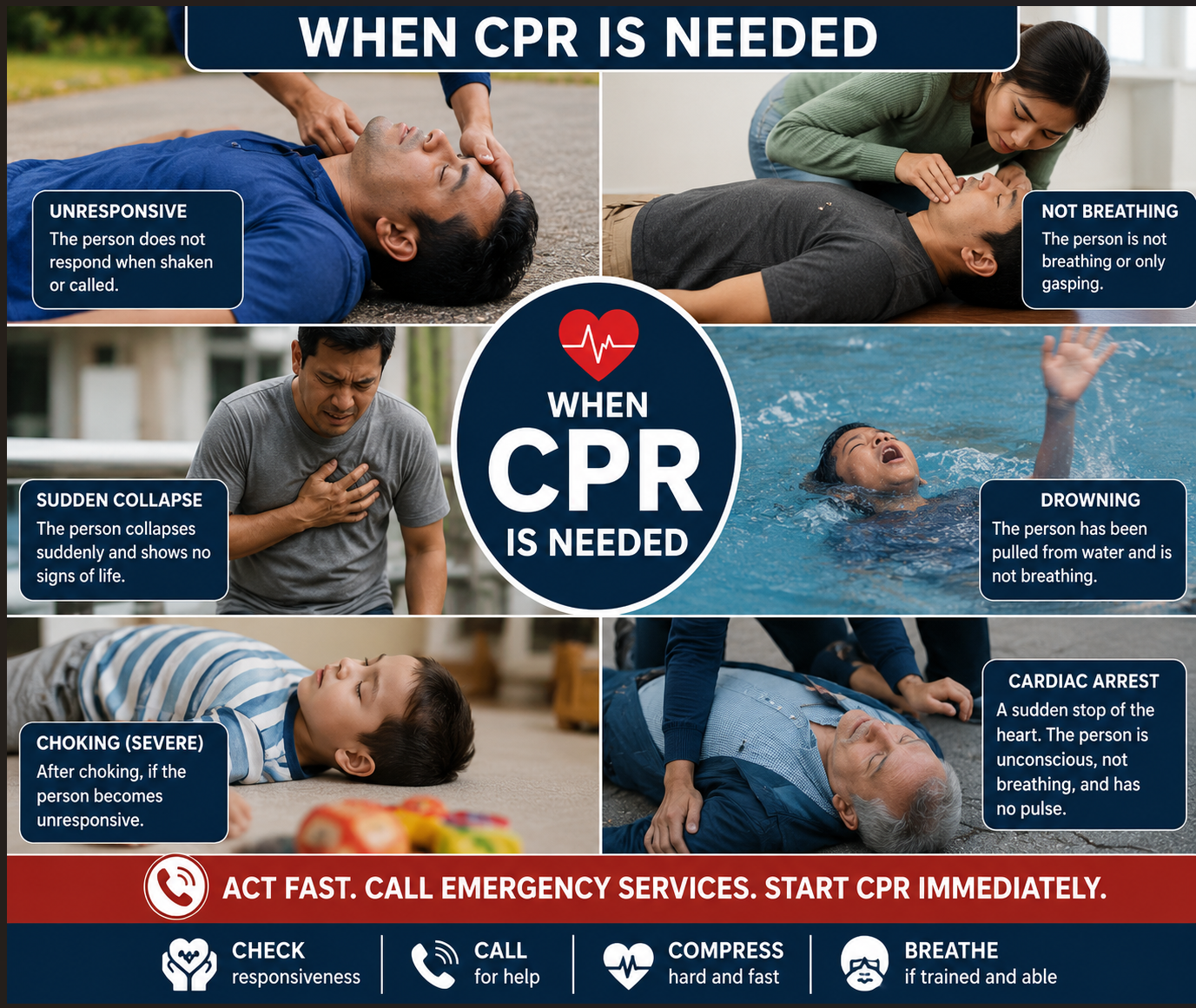
What are signs when CPR is needed?
CPR should be started immediately if a person:
1. Is Unresponsive- Does not respond when you tap their shoulders or call their name.
2.Is Not Breathing Normally- Has stopped breathing or is only gasping (agonal breathing).
3. Has No Detectable Pulse- No signs of circulation or heartbeat (for trained rescuers).
4. Suddenly Collapses- Loses consciousness unexpectedly and shows no signs of life.
5. Experiences Cardiac Arrest- The heart suddenly stops pumping blood effectively.
6. Has Been Rescued from Drowning- Is unconscious and not breathing normally after being removed from water.
7. Becomes Unconscious Due to Choking- Severe airway obstruction causes loss of consciousness.
8. Shows No Signs of Life After Electrocution or Trauma- If the person is unresponsive and not breathing after ensuring the scene is safe.
Prepare for "CPR"
No patient should undergo CPR, until the need for resuscitation has been established by appropriate assessment. Before providing CPR you must determine unresponsiveness and breathlessness.
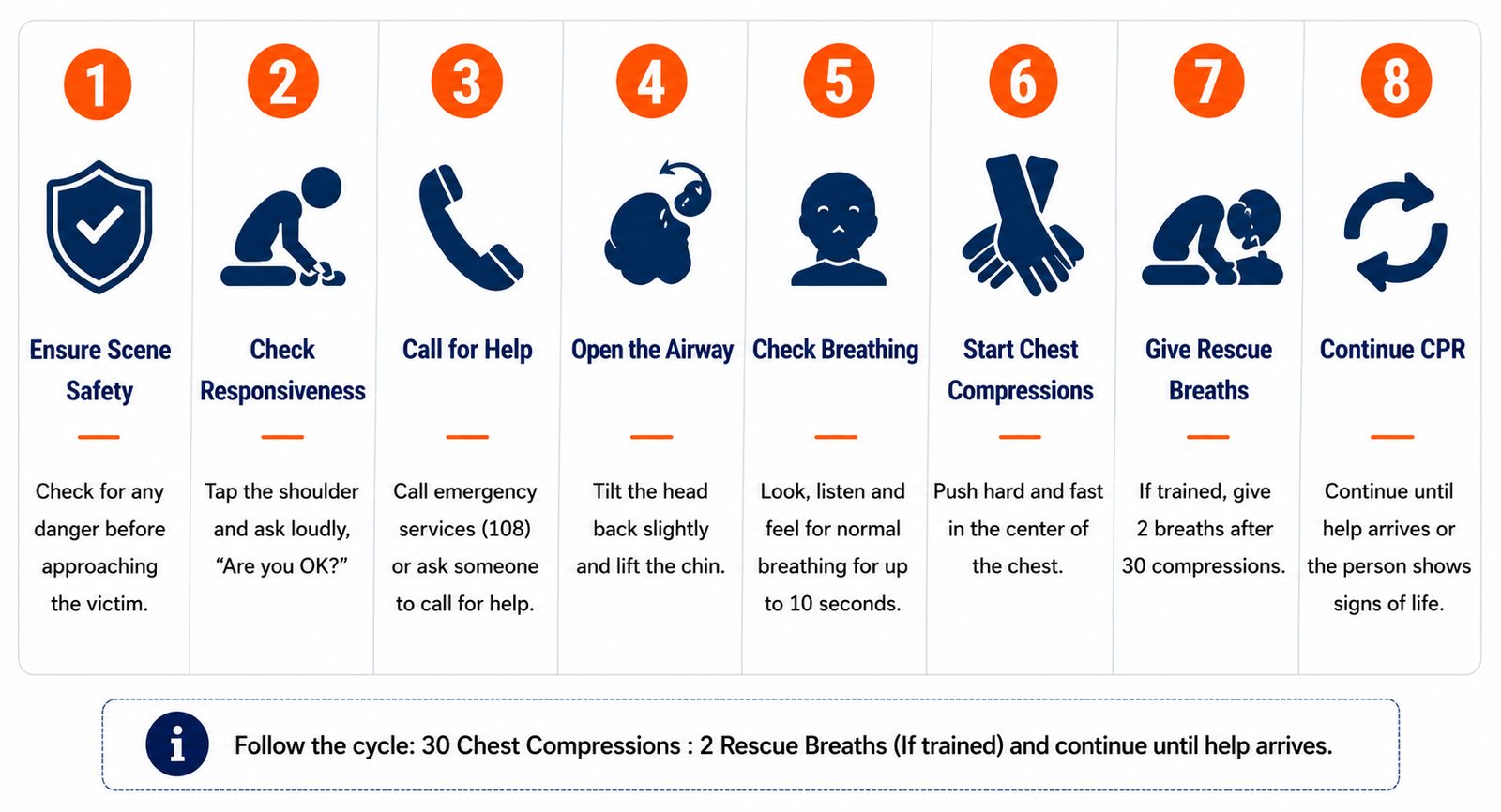
Follow these steps:
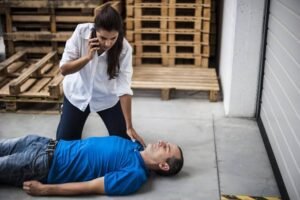
1) Establish unresponsiveness. Ask the patient, “Are you okay?” ,“What is your name?” or shake/tap the patient. If unresponsive, position the patient properly (must be supine with arms along the body on a firm, flat surface, or blood flow will be compromised).
2) Activate the EMS system. (Ask someone else to activate when available or call 108 for emergency).
3) Perform C-A-B.(circulation - airway - breathing).
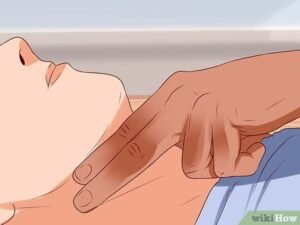
Circulation: Check pulselessness. On an adult and child, check the carotid pulse for not more than 10 seconds. On an infant, check brachial pulse. If you detect no pulse, begin CPR immediately with chest compressions.
Elimination of look, listen and feel for breathing (in 2015 AHA Guidelines for CPR). AHA recommends initiating chest compressions before giving rescue breaths (C-A-B rather than A-B-C).
Beginning CPR with 30 compressions than 2 ventilations leads to a shorter delay to first compression.
Airway: After the first set of chest compressions, open airway. Use appropriate method to open airway.
Breathing: The MFR delivers two ventilations. Use small puffs on infants.
CPR Chest Compressions for Adults-
Chest compressions consist of rhythmic, repeated pressure over the lower half of the sternum. When combined with artificial ventilation, it provides enough blood circulation to sustain Life.
Follow these steps:
1) Position the patient. Must be supine on firm, flat surface, with arms along sides.
2) Expose the patient’s chest. Remove the patient’s clothes near chest for location of heart and for some fresh air, providing patient’s privacy as much as possible.
3) Get in position. Kneel close to the patient’s side, with your knees about as wide apart as your shoulders.
4) Locate the compression site. Place the heel of the dominant hand at the center of the patient’s chest (between the nipples, along the axis of the sternum).
5) Position your hands. Put your free hand on top of your first hand. Extend or interlace your fingers(do not rest them on the chest wall).
6) Position your shoulders. They should be directly over your hands.
7) Perform chest compressions. Keeping your arms straight and your elbows locked, thrust straight downward from your shoulders. Release pressure completely after each compression.
However, do not lift or move your hands, or you will lose proper position. Count as you perform compressions.
CPR Chest Compressions for Children and Infants
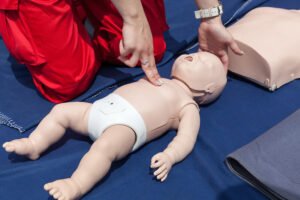
Cardiac arrest in infants is rarely caused by heart problems. Usually the cause is too little oxygen (hypoxia)due to injuries, suffocation, smoke inhalation, etc. For this reason, you should resuscitate an infant for two minute before activating the EMS system (if you are alone).
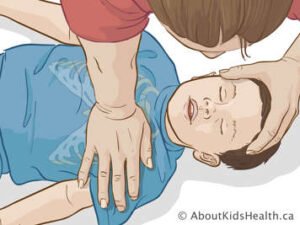
1) Position the patient. Must be supine on firm, flat surface, with arms along sides. If an infant, place him or her on your forearm, using your palm to support the head. If the infant is on his/her back, maintain head in a neutral position. It may be necessary to provide support under the shoulder with a folded blanket or towel.
2) Expose the patient’s chest. Remove the patient’s shirt or blouse.
3) Locate the compression site. In a child, use the same location as an adult. In infants, use two finger width below an imaginary line between the nipples.
4) Perform chest compressions. For an infant, use the flat part of your middle and ring fingers to compress the sternum. For a child, use the heel of one hand. Release pressure completely after each compression. However, do not lift or move your hands, or you will lose proper position. Count as you perform compressions.

ADULT CPR SUMMARY:
•Age - 9 years and older
•Compression depth: at least 2 inches (5 cm)
• Compression rate: at least 100 per minute
• Each ventilation: 1 second
• Pulse location: carotid artery
• One-rescuer cycle: 30 compressions, 2 breaths
• Two-rescuer cycle: 30 compressions, 2 breaths
• 5 cycles: (about 2 minutes)
Continue till the patient becomes conscious or till the arrival of paramedics.
CHILD CPR SUMMARY:
•Age -1-8 years of age (AHA)
•Compression depth: at least 1/3 anterior-posterior diameter or about 2 inches (5 cm)
• Compression rate: 100 - 120 per minute
• Each ventilation: 1 second
• Pulse location: Brachial Pulse
• One-rescuer cycle: 30 compressions, 2 breaths
• Two-rescuer cycle: 30 compressions, 2 breaths
• 5 cycles: (about 2 minutes)
Continue till the patient becomes conscious or till the arrival of paramedics.
KEY TAKEAWAYS
Do's
Dont's
Pro Tips to Remember

A Real-Life Story: How CPR Saved a Mother's Life-
During my Advanced Course, one of my instructors shared a real-life incident from his own life.
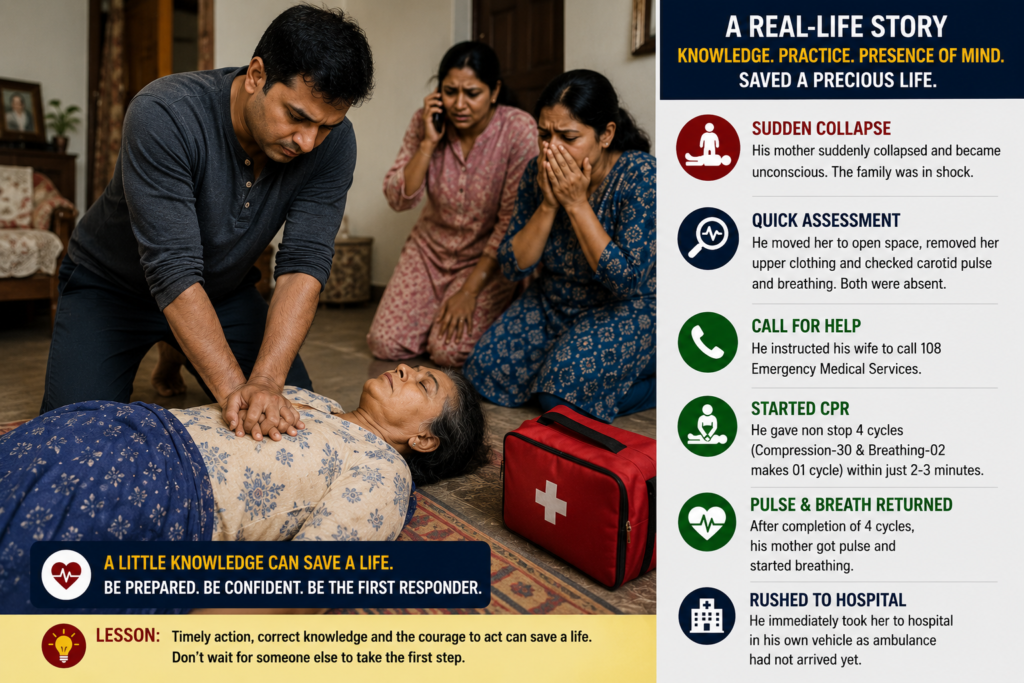
One morning, while he was on leave and sleeping at home, his mother suddenly collapsed and became unconscious. His wife and sister witnessed the incident and immediately started screaming for help.
Hearing the screams, my instructor woke up and quickly analyzed the situation. Without wasting any time, he shifted his mother to an open space and removed her upper clothing. He did not think about privacy at that moment because she was his mother and saving her life was the first priority.
Being a professionally trained NDRF rescuer, he knew exactly what to do. He immediately checked her carotid pulse and breathing. Unfortunately, both the pulse and breathing were absent, indicating that she was in cardiac arrest.
Without giving it a second thought, he instructed his wife to call 108 Emergency Medical Services while he immediately started CPR. He performed four continuous cycles of CPR (30 chest compressions followed by 2 rescue breaths = 1 cycle) without any interruption.
Within just 2–3 minutes, after completing the fourth cycle, his mother regained her pulse and started breathing again. As soon as she regained consciousness, he did not wait for the ambulance to arrive. Since every minute was critical, he immediately shifted her to the nearest hospital in his own vehicle for further medical treatment. Fortunately, she made a full recovery.
This incident clearly demonstrates how his professional training, regular practice as an NDRF rescuer, presence of mind, and situational awareness helped him save his mother's precious life.
Lesson to Learn- This real-life incident teaches us that knowledge alone is not enough—it must be supported by regular practice, confidence, and the courage to act without delay.In a medical emergency, every second counts. A person who knows CPR and responds immediately can become the difference between life and death while waiting for professional medical assistance.
Remember: 4-6 minutes (Golden Hour), correct knowledge and the willingness to help can save a precious human life. Never hesitate to take the first step when someone's life is at stake.
Frequently Asked Questions
Related Topics
Disclaimer
This content is for educational purposes only and does not replace professional medical training or advice. In real emergencies, always follow guidelines of qualified medical professionals.