
Article Information
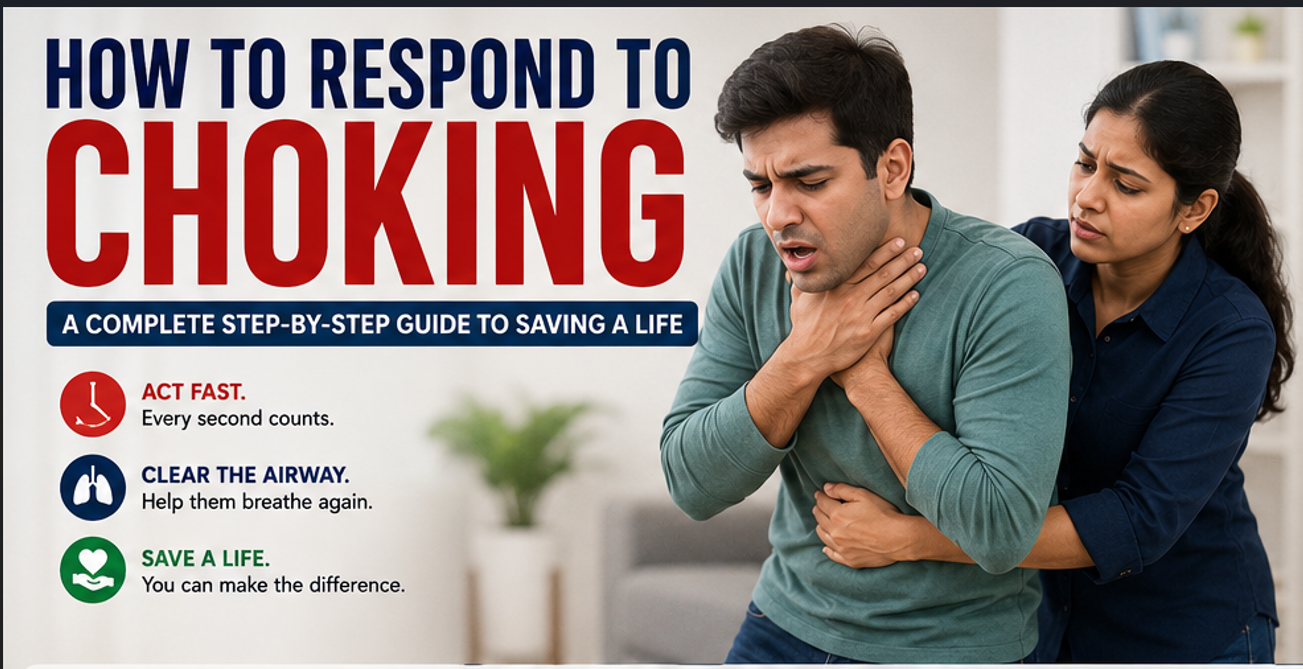
Managing FBAO (Foreign Body Airway Obstruction) in Adults & Children
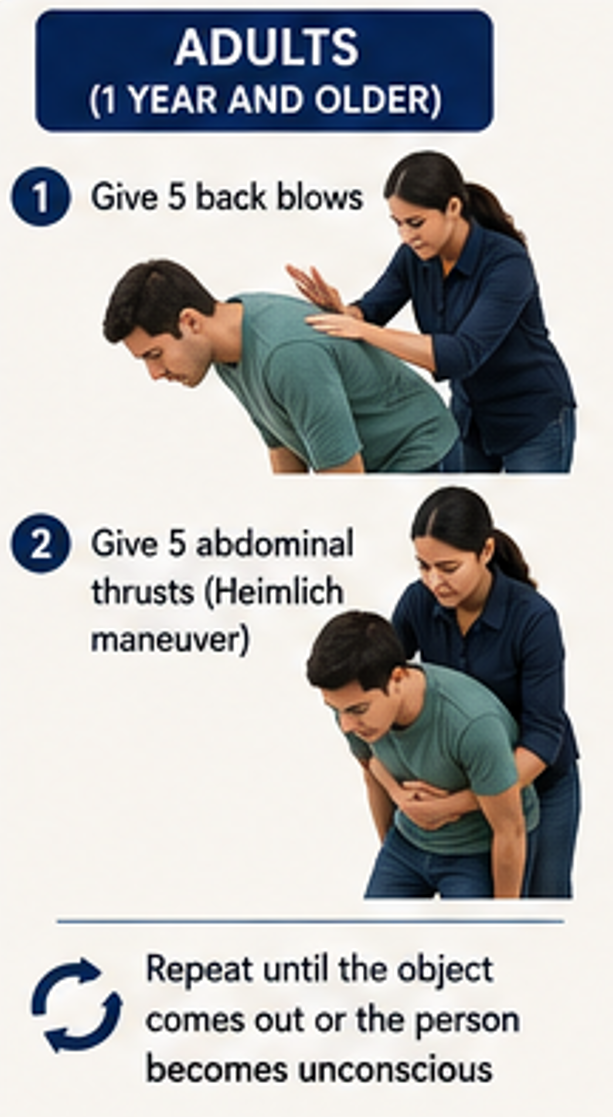
- Responsive Adult/Child(Patient Standing or Sitting)
1) Firstly, introduce yourself and ask permission.
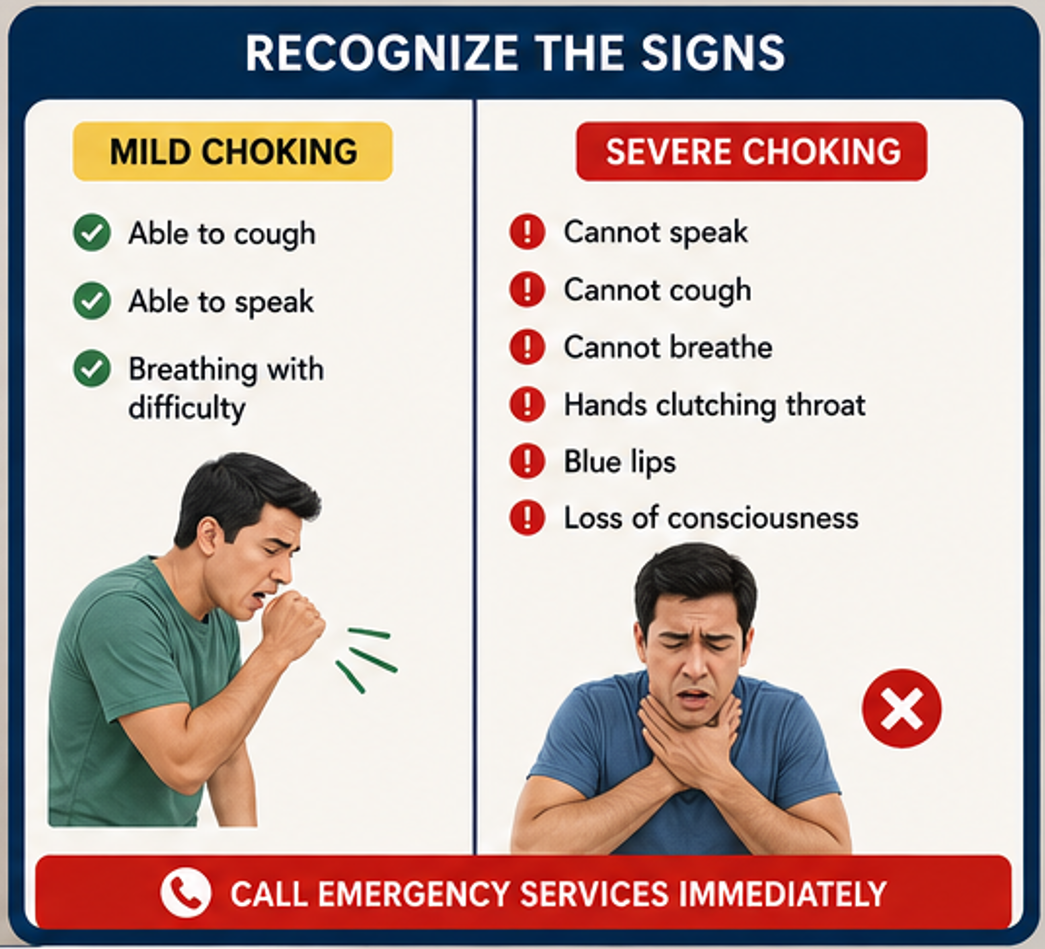
2) Determine if the obstruction is complete or partial obstruction with poor air exchange. Ask, “Are you choking?” or “Can you speak?”
3) If partial obstruction, encourage the patient to cough, if unable to cough follow further steps.
4) Get in position. Stand behind the patient. Place one leg between the patient’s legs to obtain astable position.
5) Position your hands. Reach around with one hand to locate the patient’s navel. Make a fist with one hand, place the thumb-side of the fist against the patient’s abdomen, slightly above the navel and below the Xiphoid process.
6) Perform an abdominal thrust. Grasp your fist with the first hand and pull in and up with swift firm thrusts.
7) Repeat thrusts until the object is expelled from the airway or the patient becomes unconscious.
Note- If the patient becomes unresponsive before you are able to clear the airway obstruction, direct someone to call EMS and Begin CPR.
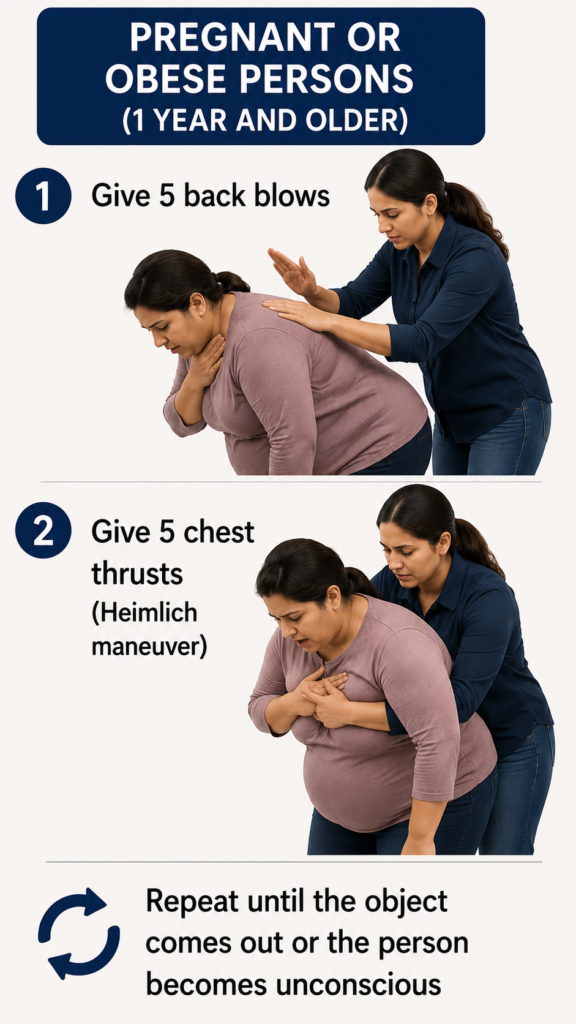
Managing FBAO (Foreign Body Airway Obstruction) in Pregnant or Obese Responsive Adult
- Chest thrusts are to be used only with patients in late stages of pregnancy or with the markedly obese, when abdominal thrusts cannot be applied effectively.
1) Determine if the obstruction is complete or partial obstruction with poor air exchange. Follow the same process as above directed.
2) Get in position. Stand behind the patient, with your arms directly under the patient’s armpits and encircle the patient’s chest.
3) Position your hands. Place the thumb-side of your fist along the patient’s sternum, avoiding the Xiphoid process and margins of the rib cage.
4) Perform a chest thrust. Grab your fist with the other hand and perform 5 chest thrusts in rapid succession. Observe for evidence that the object has been removed.
5) If the patient’s airway remains obstructed, repeat the thrusts until the object is expelled from the airway or the patient becomes unconscious.
6) If the patient becomes unresponsive before you are able to clear the airway obstruction, activate the EMS and begin CPR.
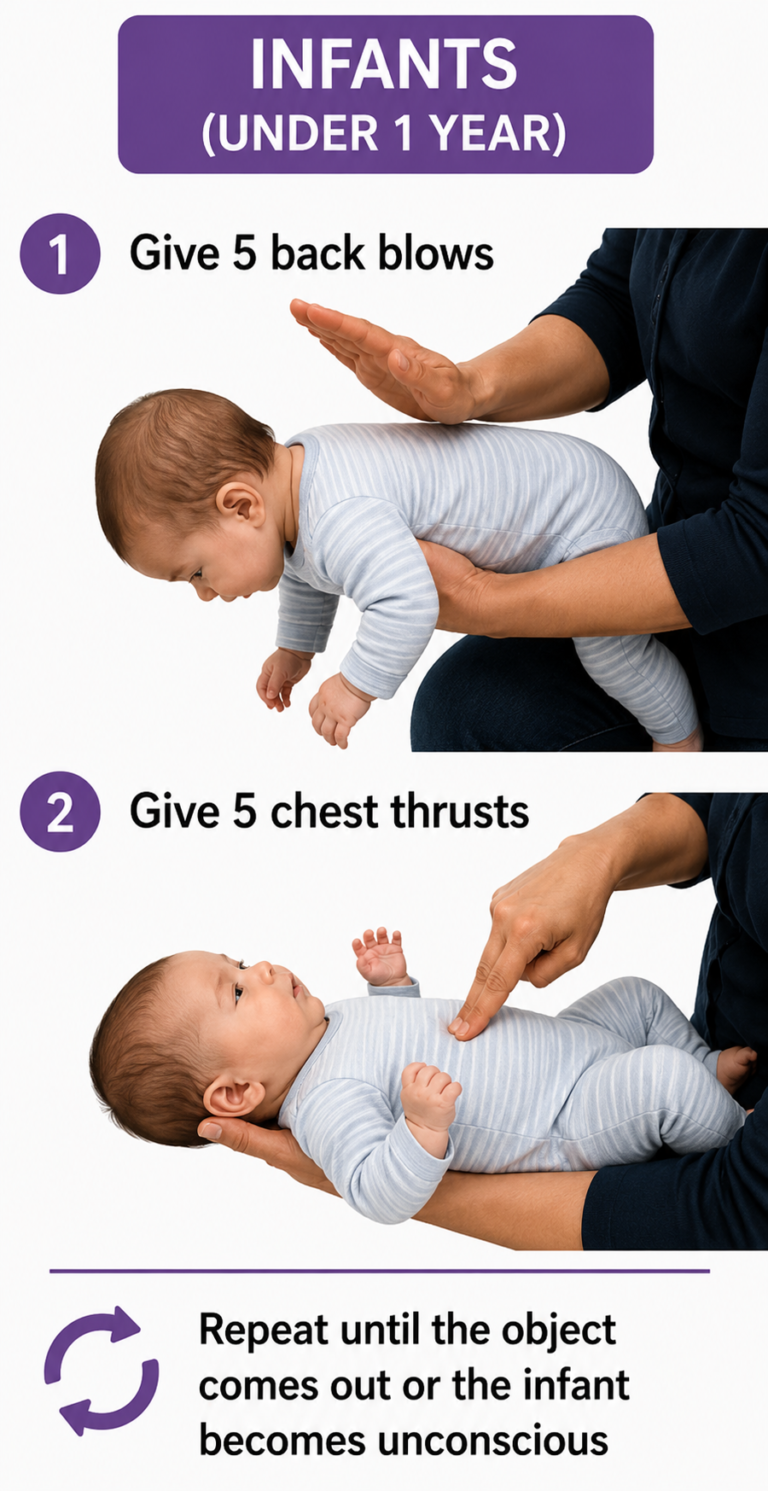
Managing FBAO (Foreign Body Airway Obstruction) in Infants
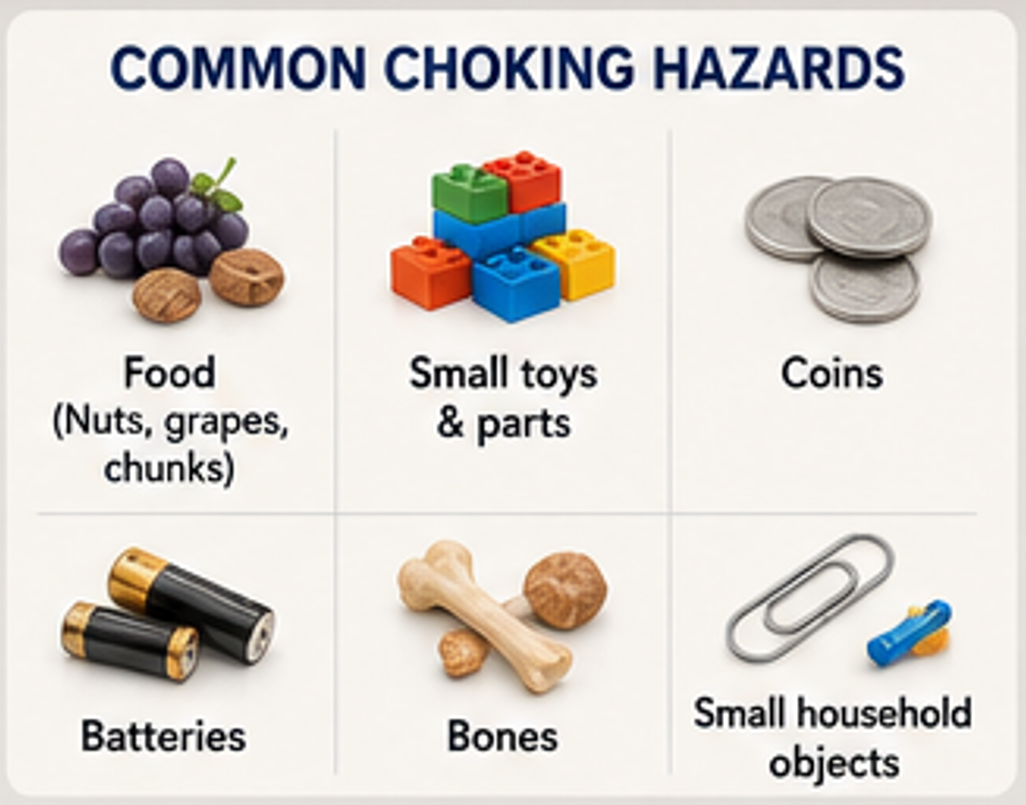
- Always suspect foreign body airway obstruction in infants who demonstrate a sudden onset of respiratory distress associated with gagging, coughing or wheezing. Most common causes are toys or other small objects (coins).
1) Verify complete airway obstruction. Serious breathing difficulty, ineffective cough, no strong cry.
2) Position the infant. Straddle the infant face down over one of your forearms, head lower than the body. Support the infant’s head by holding the jaw with your hand.
3) Deliver 5 back blows. Use the heel of your hand between the shoulder blades. If foreign object is not expelled, position the infant face-up on your arm, head lower than the body.
4) Deliver 5 chest thrusts. Position your middle and ring fingers in the middle of the infant’s sternum, just below the imaginary line between the infant’s nipples. Use a quick downward motion.
5) Repeat steps 2 to 4 until effective, or until infant becomes unconscious.
6) Begin CPR when the infant becomes unconscious and direct someone to activate EMS.
KEY TAKEAWAYS
Do's
Dont's
Pro Tips to Remember

Frequently Asked Questions
Related Topics
Disclaimer
This content is for educational purposes only and does not replace professional medical training or advice. In real emergencies, always follow guidelines of qualified medical professionals.
hey this topic is good and informative.