
QUICK NAVIGATION
What is Fracture?
Types of Fractures
Signs & Symptoms
Pre-Hospital Treatment
Splinting Techniques
Improvised splintings
Special Situations
Key Takeaways
Dos, Don'ts & Pro Tips
FAQs
What is Fracture?
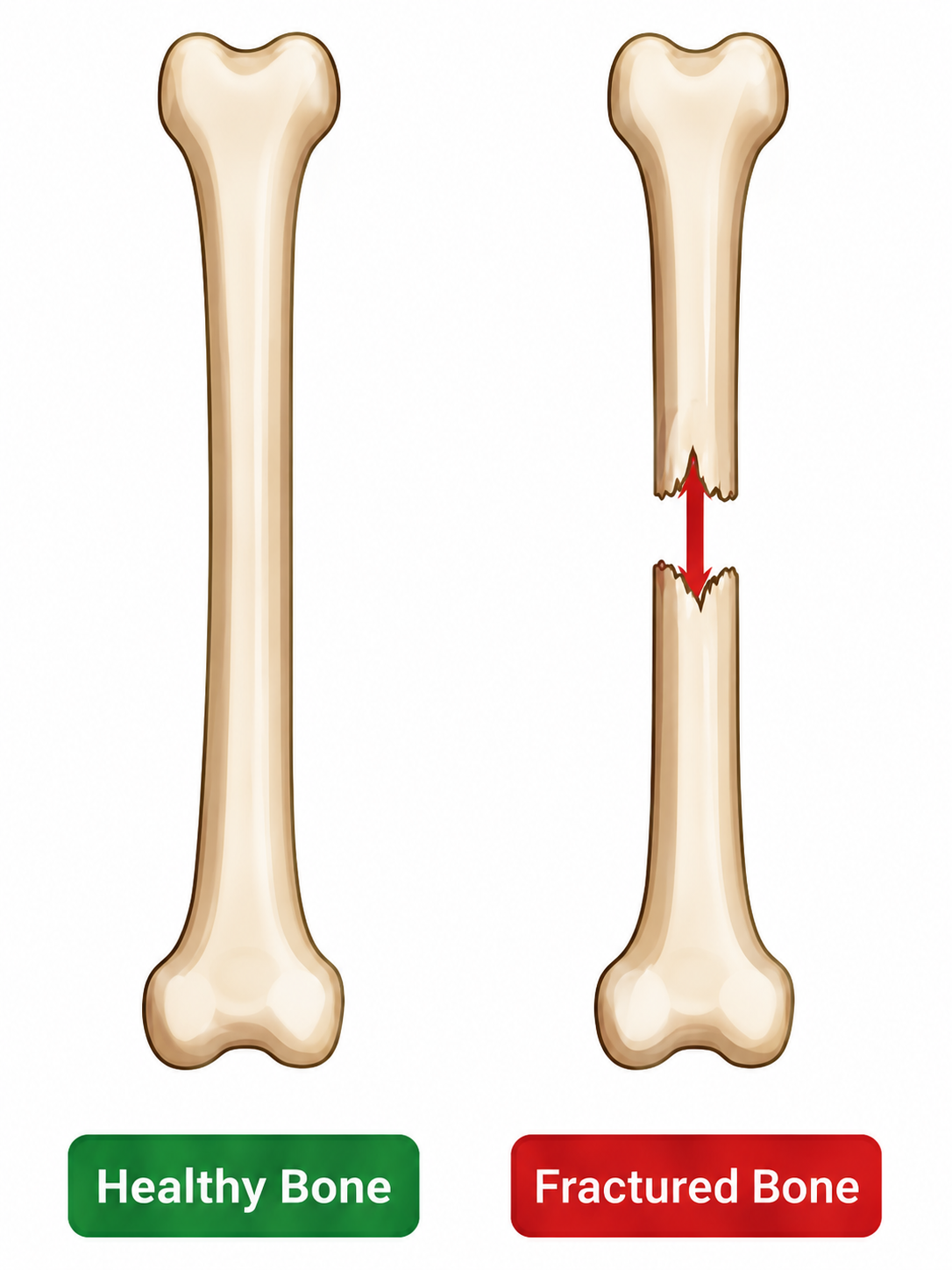
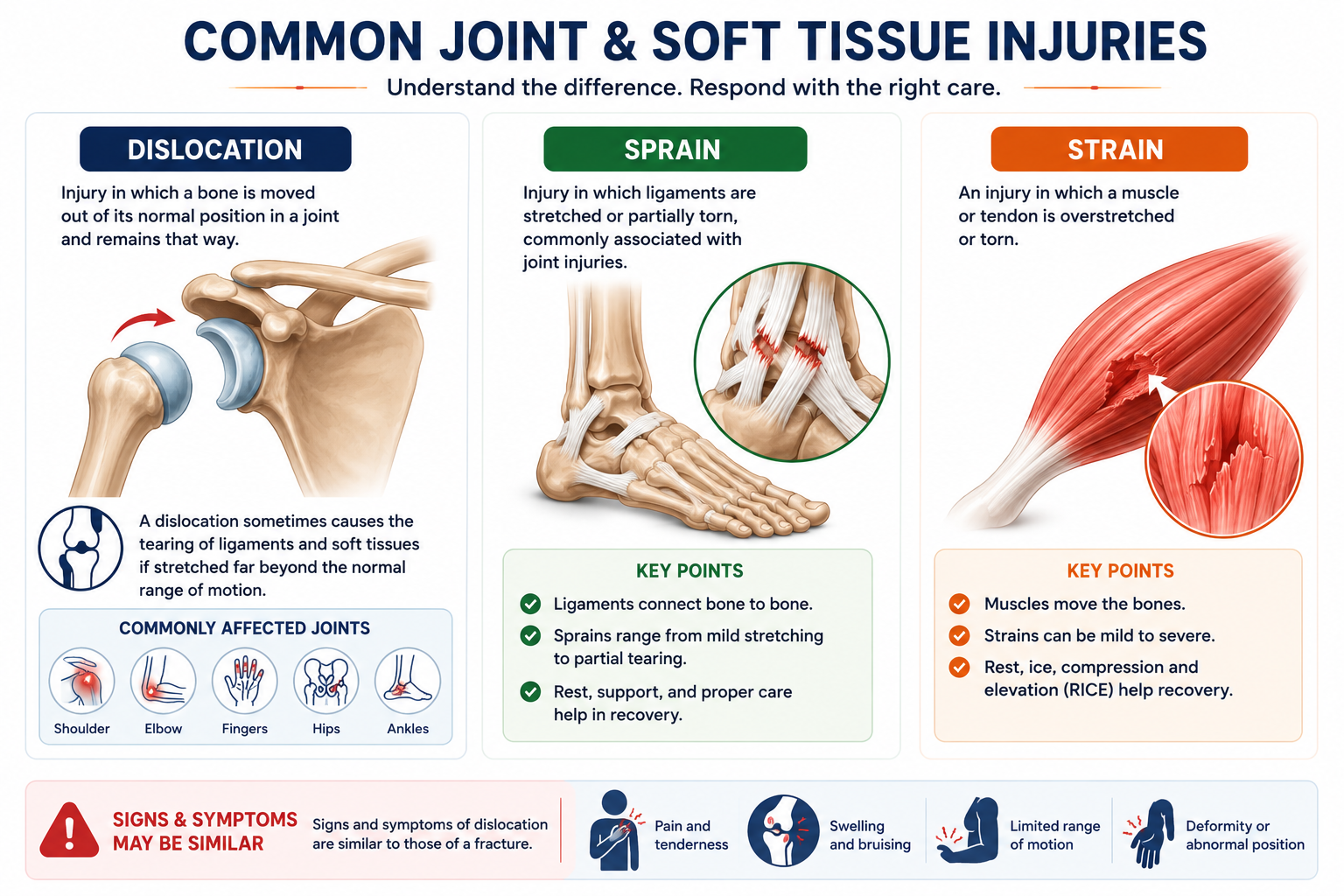
A Fracture is a break or crack in a bone. It can be partial or complete. Proper immobilization helps reduce pain and prevent further injury.
What is Splinting?
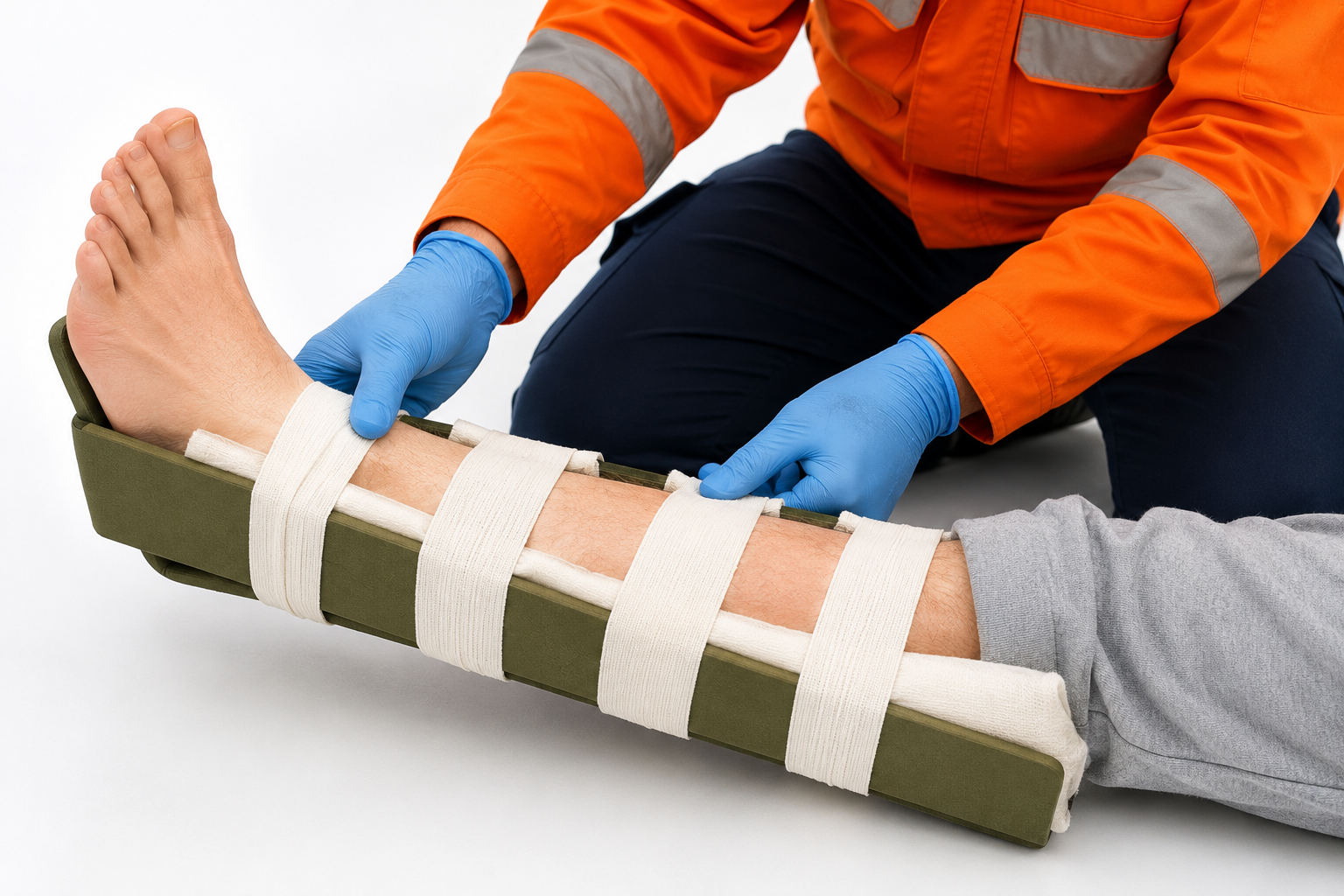
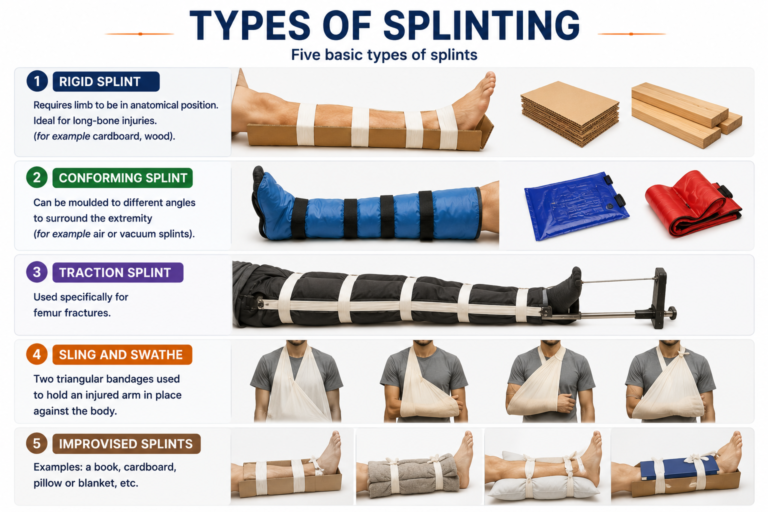
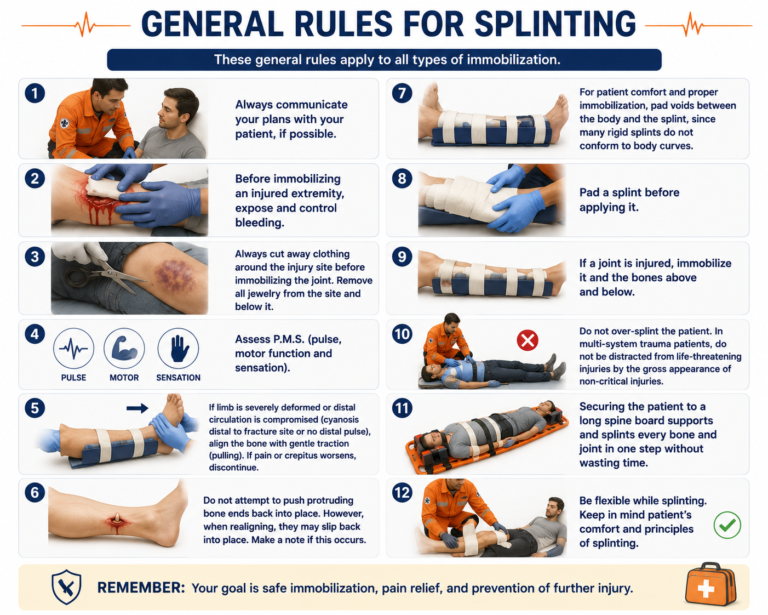
Applying a device to stabilize any painful, swollen, or deformed body part. The primary objective of splinting is to prevent further movement of body parts.
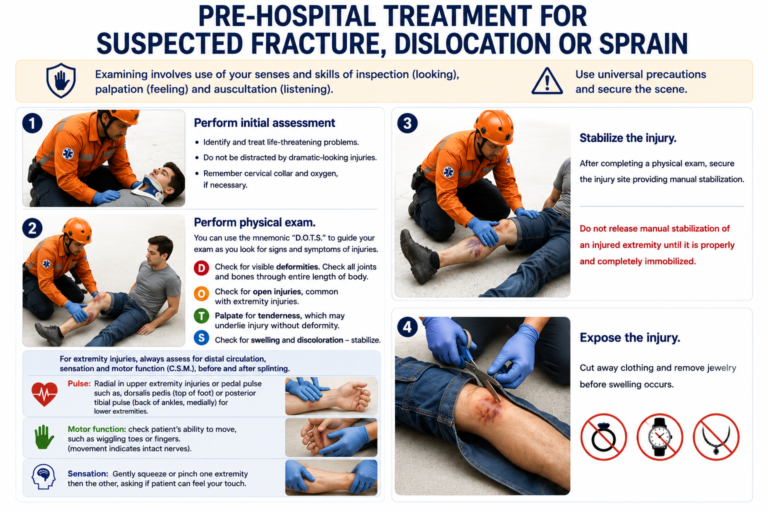
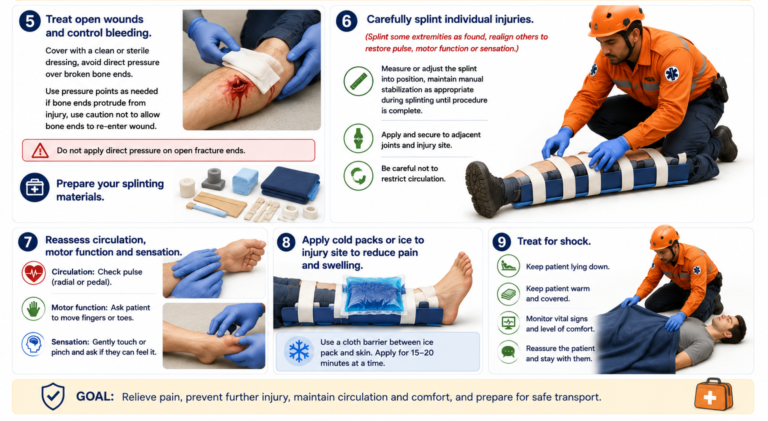
Special Situations
- Suspected Spinal Injury
- Open Fracture
- Multiple Fractures
- Child Fracture
Possible Complications
- Internal Bleeding
- Shock
- Infection
- Nerve Injury
- Blood vessel injury
- Compartment syndrome
Key Takeaways
- Key casualty still.
- Immobilize above and below.
- Control bleeding first.
- Never force bones straight.
- Check circulation frequently.
- Transport safety.
DO's
- Support injured limb.
- Immobilize properly.
- Use padding under splints.
- Recheck circulation.
- Keep casualty.
- Call emergency services.
Don'ts
- Don't straighten a deformed limb.
- Don't move unnecessarily.
- Don't push exposed bone in.
- Don't tie bandages too tight.
- Don't allow walking on a suspected leg fracture.
- Don't ignore numbness.
Pro Tips
- Pad before you splint.
- immobilize above & below the injury.
- Check PMS- Perfusion, Motor function & sensation.
- When in doubt, splint it.
- Keep the casualty warm.
Related Articles
- Bleeding Control
- CPR
- Soft Tissue Injuries
- Choking Response
- Patient assessment
- PPE for First Responders
Frequently Asked Questions
What is the difference between an open fracture and a closed fracture?
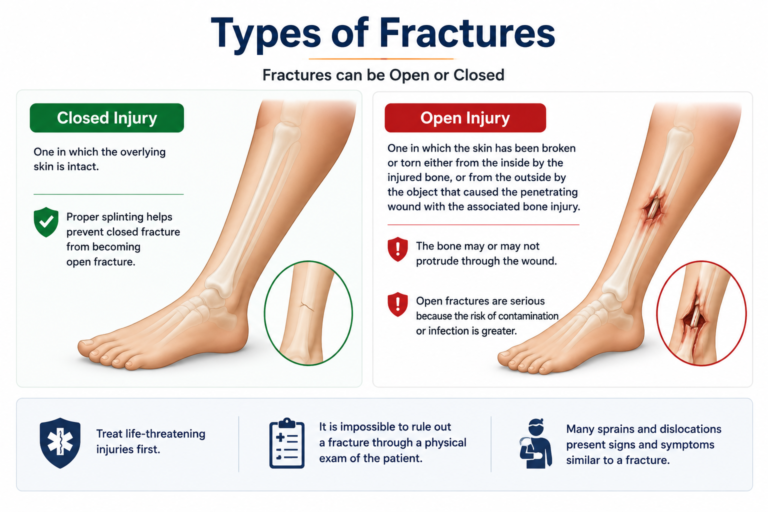
A closed fracture occurs when the bone breaks but the skin remains intact. An open fracture involves a broken bone with an associated wound in the skin, increasing the risk of contamination and infection. Open fractures require urgent medical attention.
Should I straighten a broken limb before applying a splint?
No. In most situations, immobilize the injured limb in the position found. Gentle realignment should only be considered if there is no pulse or severe circulation compromise, and only by trained responders following established first aid guidelines.
Why is splinting important before transporting an injured person?
Splinting reduces movement of the injured bone or joint, decreases pain, helps prevent further damage to muscles, nerves, and blood vessels, and makes transportation safer and more comfortable.
What are the signs of a fracture or serious musculoskeletal injury?
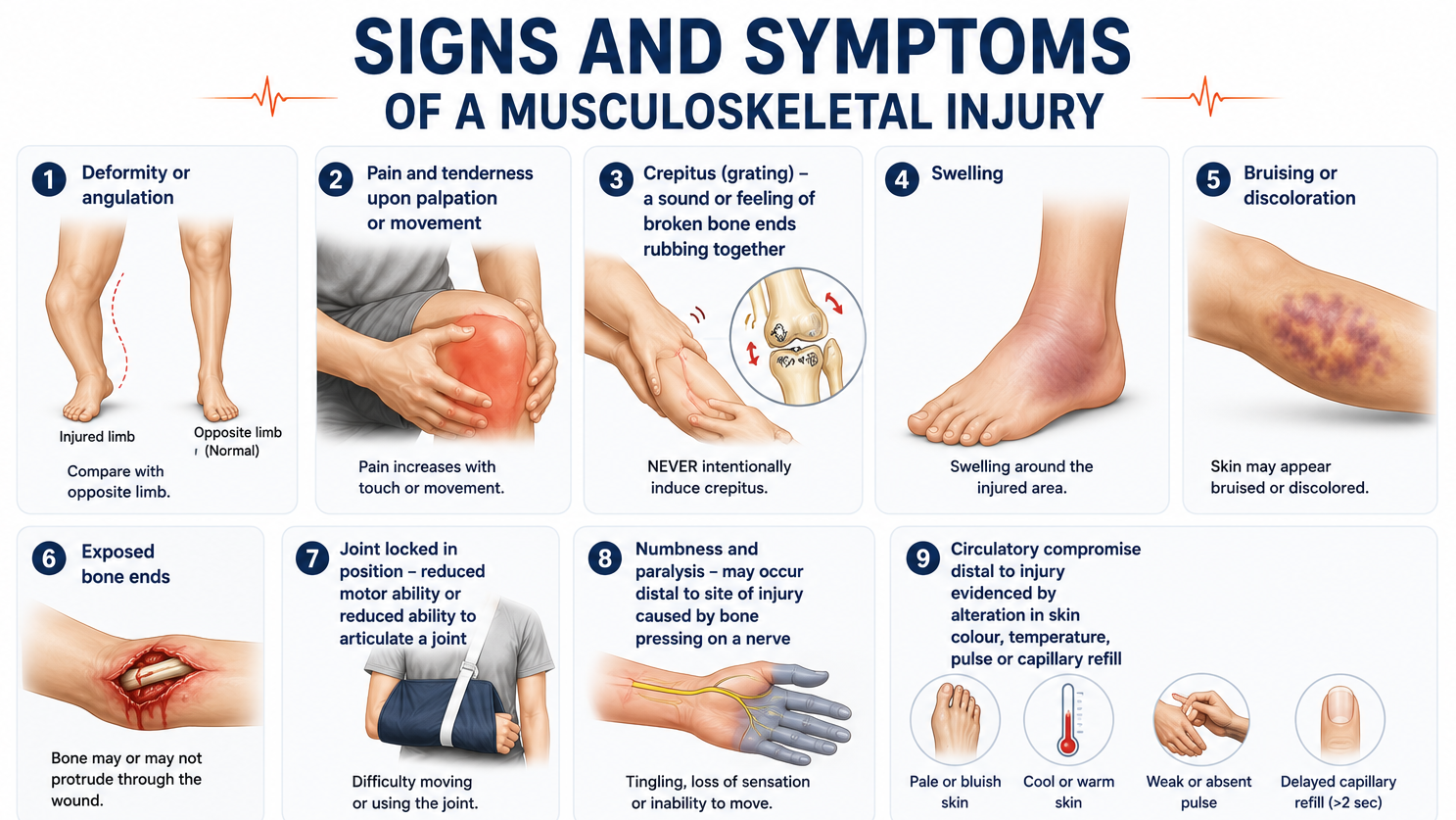
Common signs include severe pain, swelling, bruising, deformity, tenderness, inability to move the limb normally, numbness, reduced circulation, or an open wound with a suspected broken bone. These injuries should be assessed by a healthcare professional.
Can everyday household items be used as a splint?
Yes. If a commercial splint is unavailable, improvised splints such as cardboard, wooden boards, rolled newspapers, pillows, or blankets can be used, provided they securely immobilize the injured area without restricting blood circulation.
What should I avoid when treating a suspected fracture?
Do not attempt to push protruding bone back into the wound, unnecessarily move the injured limb, force a joint into position, or intentionally check for crepitus (grating sensation). Immobilize the injury and seek medical care as soon as possible.
Reminder
Early and proper immobilization can reduce pain, prevent further injury and improve outcomes. Your calm response can make a big difference.
