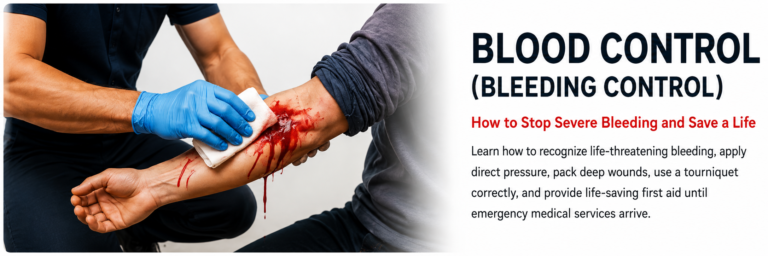
Rescuer wearing protective gloves applying direct pressure with sterile gauze to a severely bleeding forearm, demonstrating life-saving blood control first aid in a medical training banner.

Category- First Aid

Reading Time- 8-10 Mins

Difficulty-Begginer

Last Updated-08/07/2026

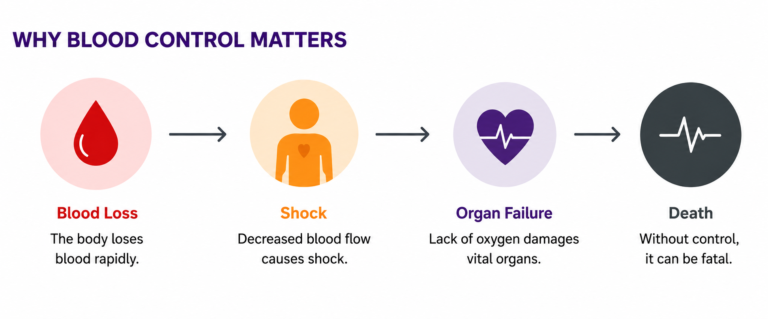
Infographic showing why blood control matters, illustrating the progression from blood loss to shock, organ failure, and death if severe bleeding is not controlled promptly.
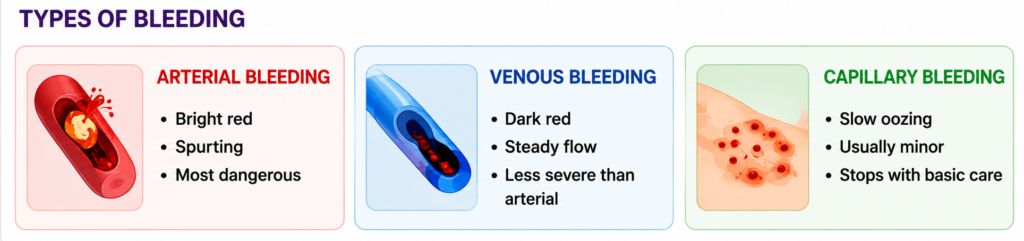
Infographic comparing the three types of bleeding—arterial, venous, and capillary—highlighting their appearance, blood flow characteristics, and severity in first aid.
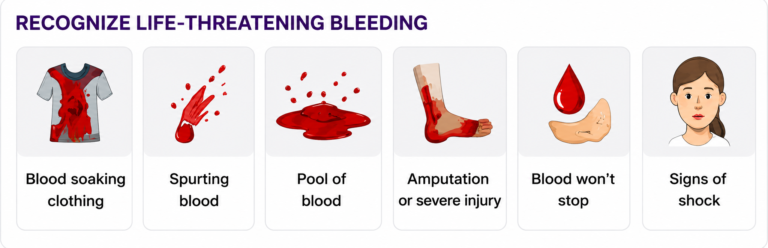
Educational infographic highlighting the signs of life-threatening bleeding, including blood-soaked clothing, spurting blood, pooling blood, amputation or severe injury, uncontrolled bleeding, and signs of shock.

Before you help

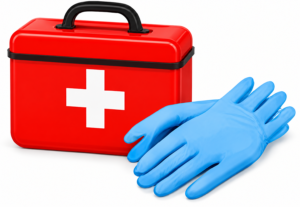
First aid kit and disposable medical gloves, representing essential personal protective equipment (PPE) and emergency supplies for safe blood control and first aid.

Hemorrhage- The loss of blood from the body. It can be external and or internal.

External Hemorrhage Types
With external hemorrhage, the wound and loss of blood are visible.
• Arterial: Arterial hemorrhage is bright red and characterized by blood spurts coinciding with the pulse.
• Venous: Venous bleeding is steady and dark red.
• Capillary: Blood flows smoothly out of the capillaries and is similar in appearance to venous bleeding. (Image shown above in types of Bleeding).

Internal Hemorrhage
Internal hemorrhaging can range from minor to a life threatening problem.
The loss of blood cannot be seen in internal bleeding.
Examples:
• A closed fracture of the femur can cause a loss of 1 liter of blood.
• A laceration to the liver or spleen can cause a severe loss of blood, potentially fatal.
Signs and symptoms
Some signs of internal bleeding can be identified.
One or more of the following may present:
• Coughing up bright red blood
• Vomiting dark-colored blood (the color of coffee grounds)
• Small or large areas of bruising
• Rigid abdomen
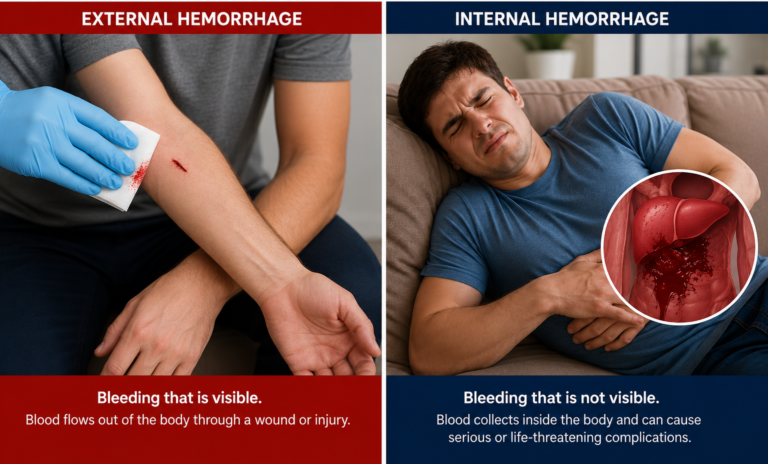
Horizontal infographic comparing external and internal hemorrhage, showing a small bleeding forearm wound with direct pressure and a person experiencing abdominal pain caused by internal bleeding.
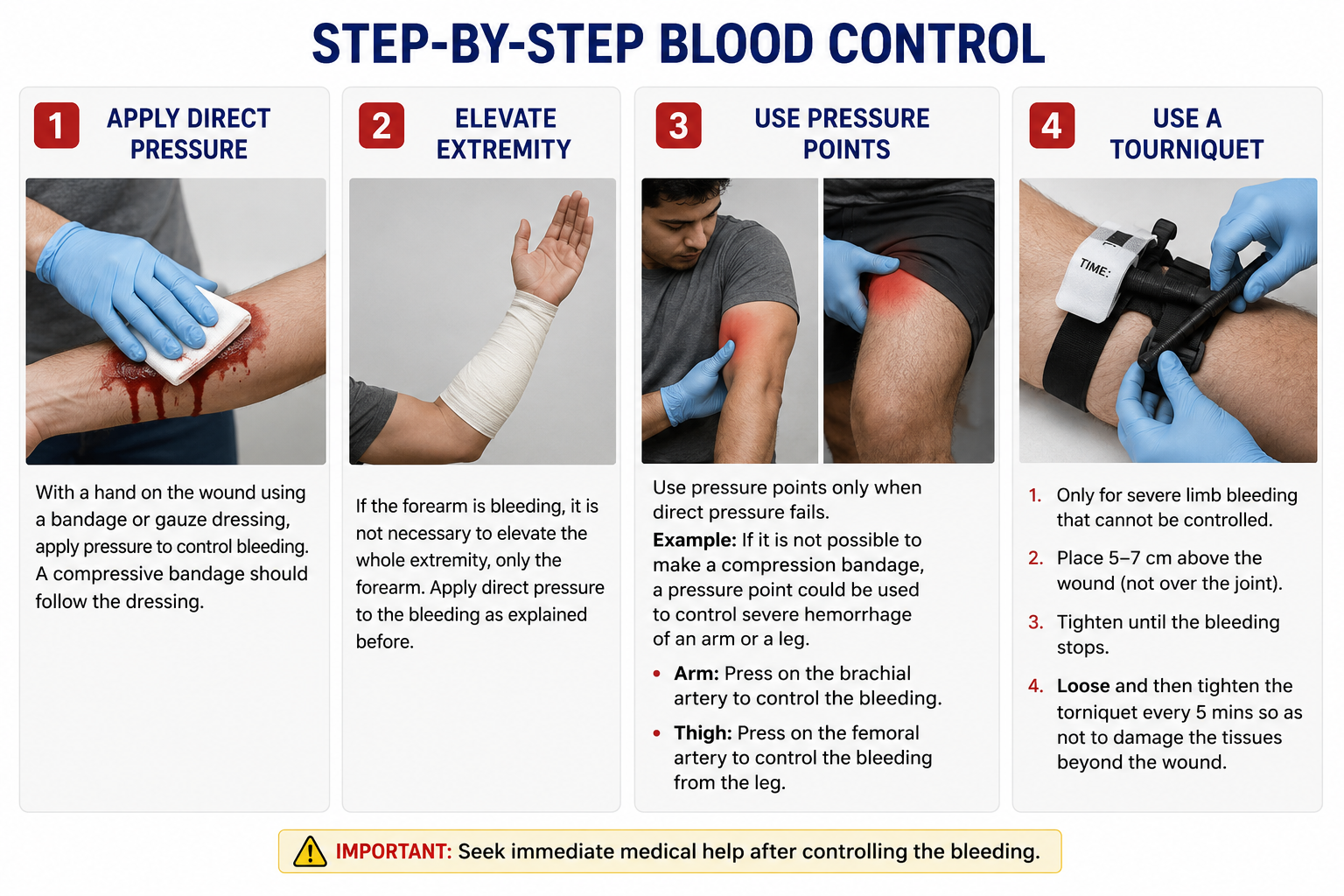
Step-by-step blood control infographic showing four life-saving techniques: applying direct pressure, elevating an injured extremity, using pressure points, and applying a tourniquet for severe bleeding.
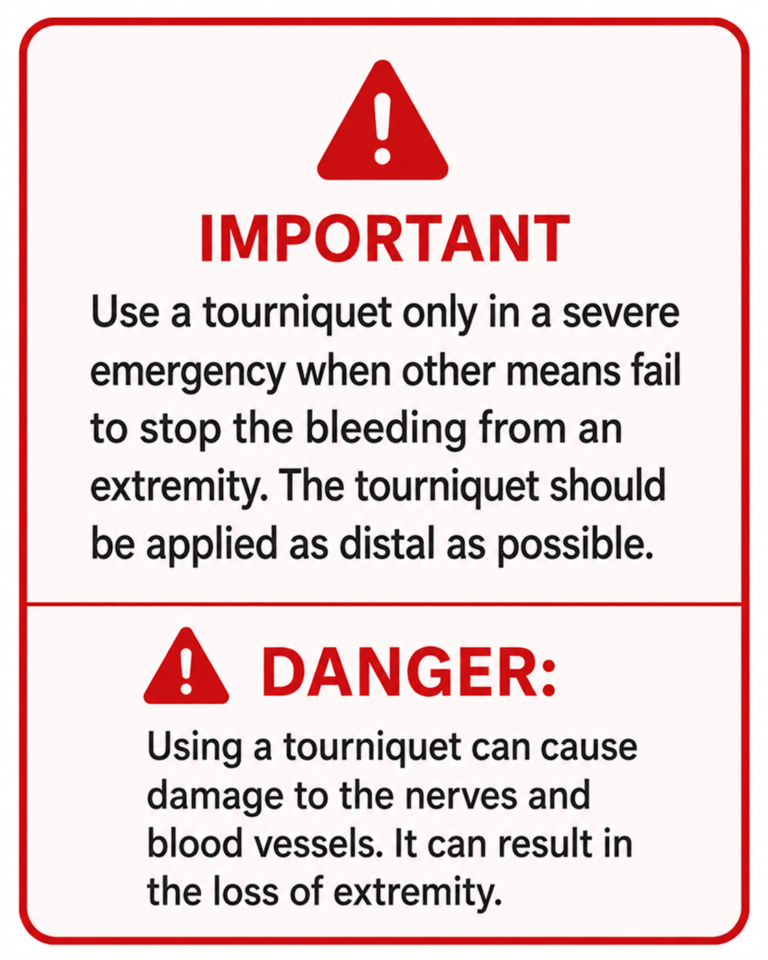
Tourniquet safety warning infographic explaining that a tourniquet should only be used for severe extremity bleeding when other bleeding control methods fail, along with important danger warnings about improper use.

COMMON MISTAKES

Do's

Dont's

Pro Tips to Remember

Remembering Pro Tips

Frequently Asked Questions

Can I use my hands if I don't have gloves?

Yes. If gloves are unavailable, control the bleeding immediately using a clean cloth, plastic barrier, or your bare hands if necessary. Wash your hands thoroughly afterward.

No. Leave the original dressing in place, add another dressing on top, and continue applying firm direct pressure.

Maintain firm, continuous pressure until the bleeding stops or emergency medical personnel take over.

When should I use a tourniquet?

Use a tourniquet only for severe, life-threatening bleeding from an arm or leg that cannot be controlled with direct pressure.

Yes. A tourniquet should be used only for life-threatening bleeding from an arm or leg when direct pressure and other bleeding control methods fail. Incorrect or unnecessary use can damage nerves and blood vessels and may increase the risk of permanent limb injury.

Call emergency medical services immediately, monitor breathing, and begin CPR if the person has no pulse & breathing and you are trained to do so.

Disclaimer

This content is for educational purposes only and does not replace professional medical training or advice. In real emergencies, always follow guidelines of qualified medical professionals.

1 thought on “Blood Control”

  1. Priyanka Pathania

    “One of the best websites I’ve found for first aid and disaster response. The content is clear, well-organized, and easy to follow. I feel more confident about handling emergencies after reading these articles.”

Leave a Comment

Your email address will not be published. Required fields are marked *

Scroll to Top