
Category- First Aid
Reading Time- 08 -12 Mins
Difficulty-Begginer
Last Updated-12/07/2026
QUICK NAVIGATION
1. What is CPR?
2. Types of deaths?
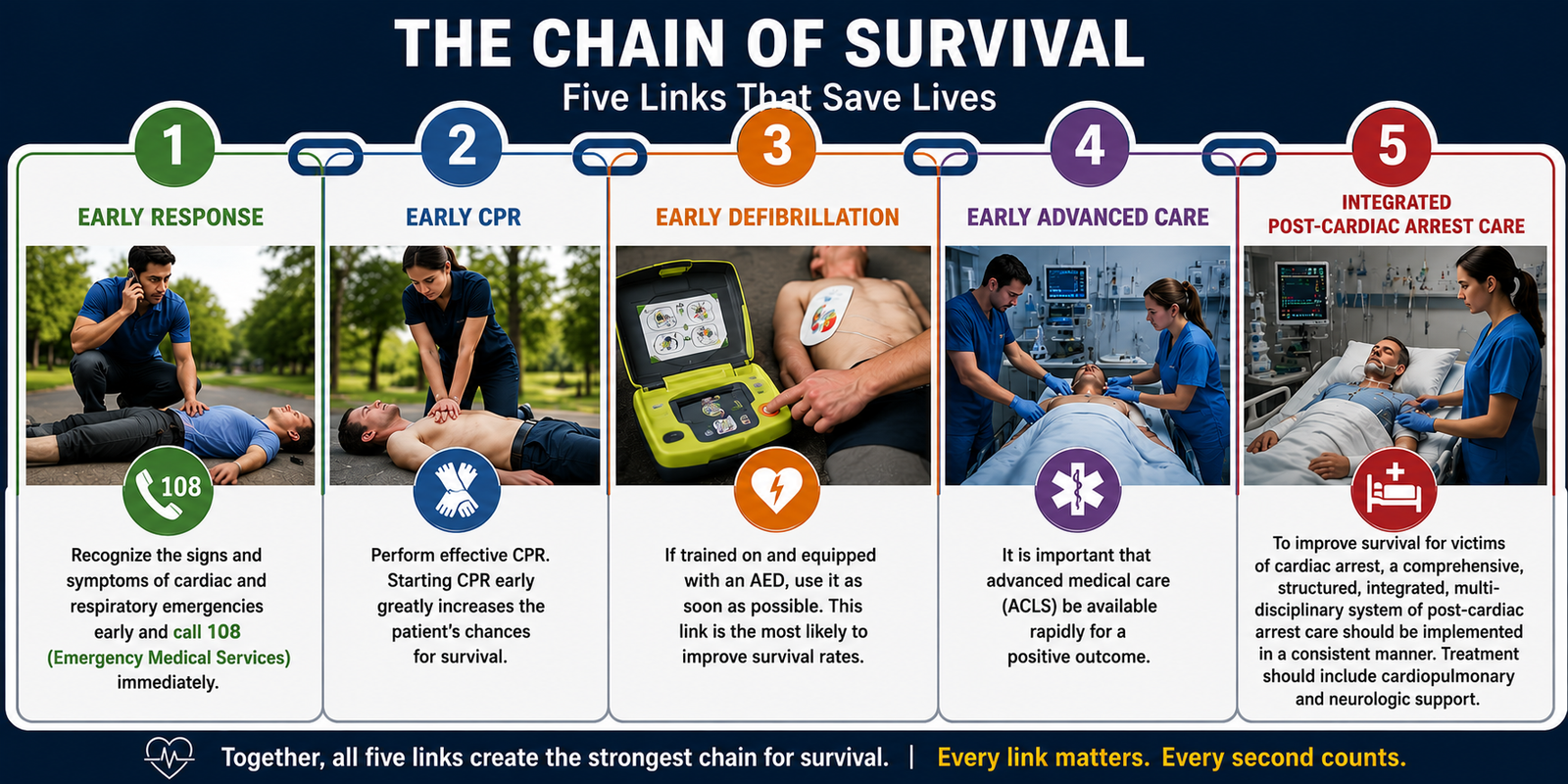
3. What is Chain of Survival?
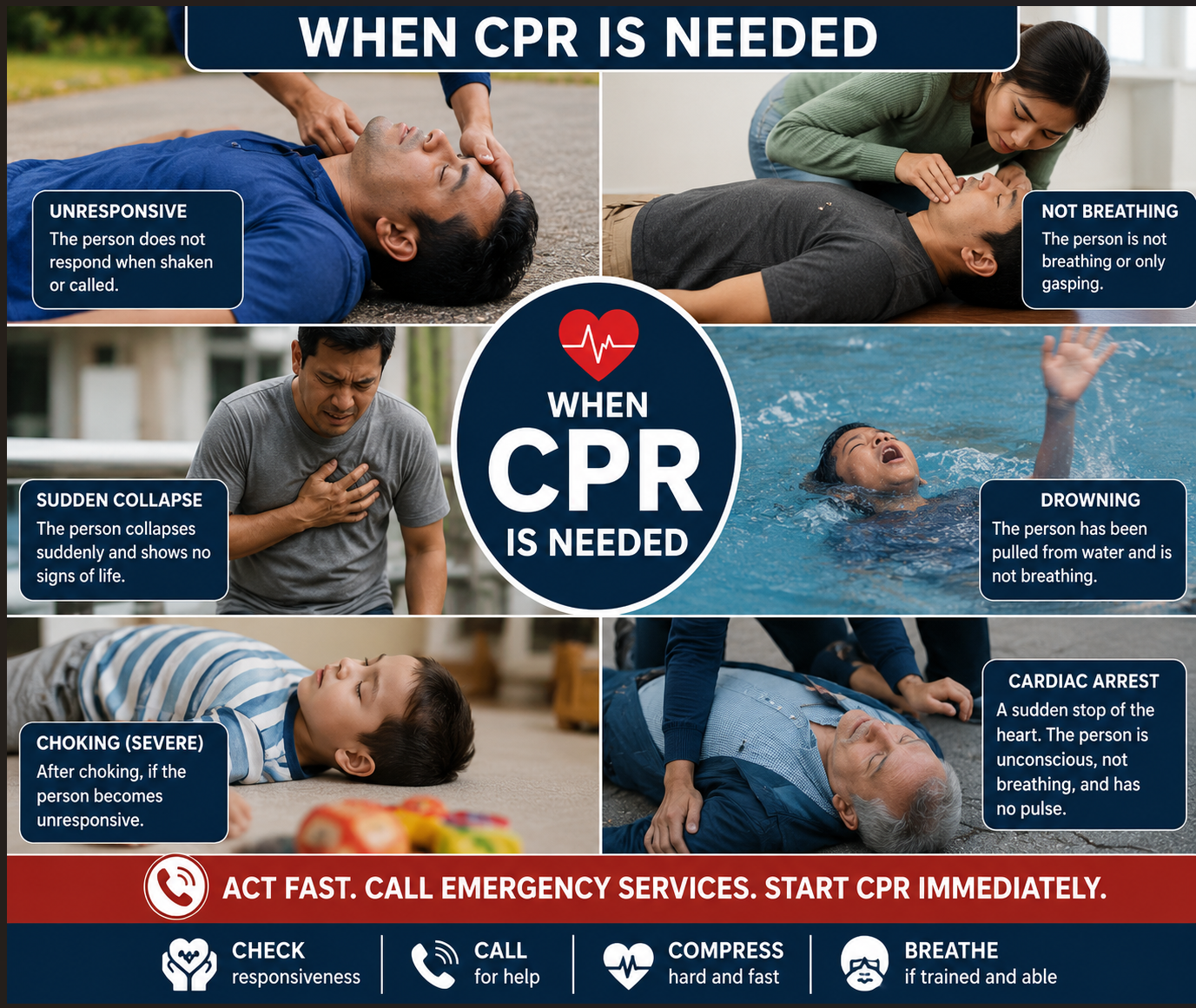
4. When CPR is needed?
5. Prepare for CPR
6. How many Compressions & Breathing?
7. Correct posture to give CPR
8. Key Takeaways & Common mistakes
9. Special situations & Possible Complications
10. Dos, Don'ts & Pro Tips
11. FAQs
What is CPR?
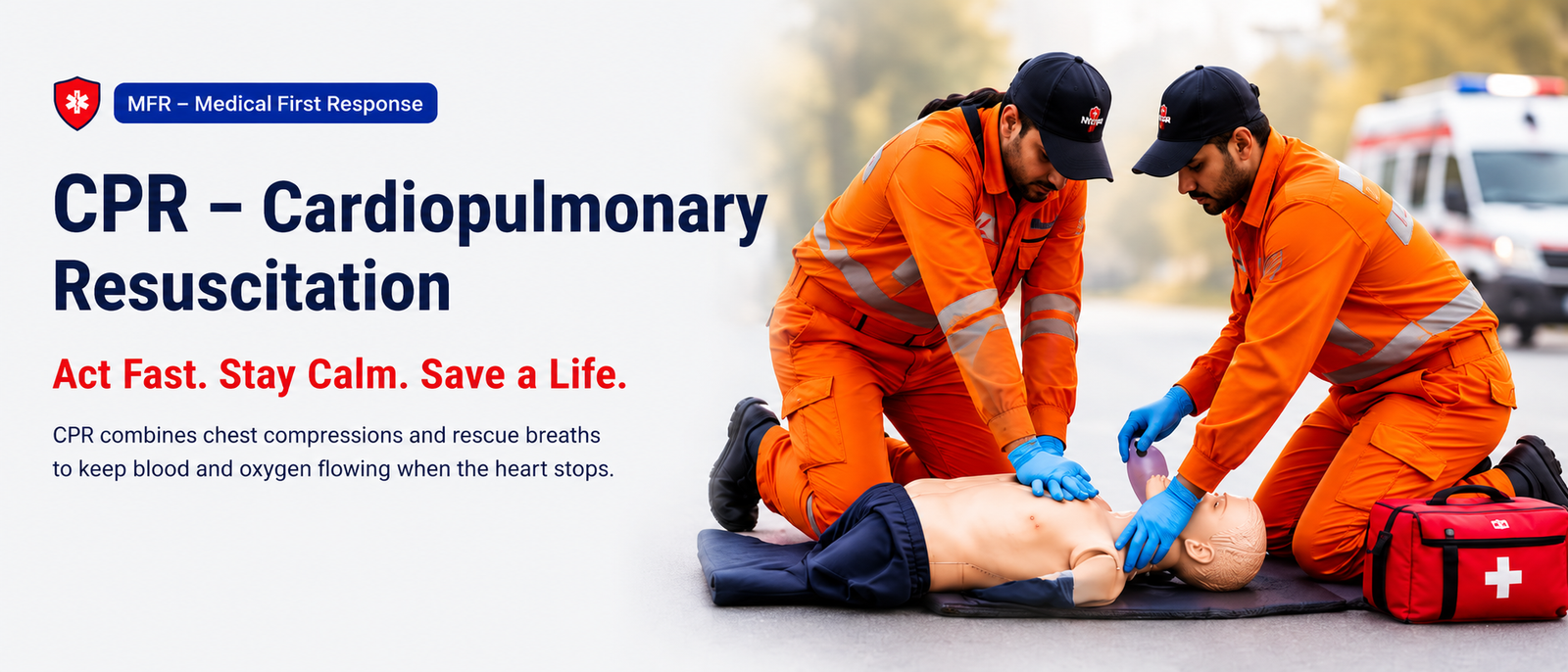
CPR is an emergency procedure performed when, someone's heart stops beating. It helps to maintain blood & oxygen to revive the brain and vital organs until professional help arrives.
Key Takaways
- Recognize early and act fast
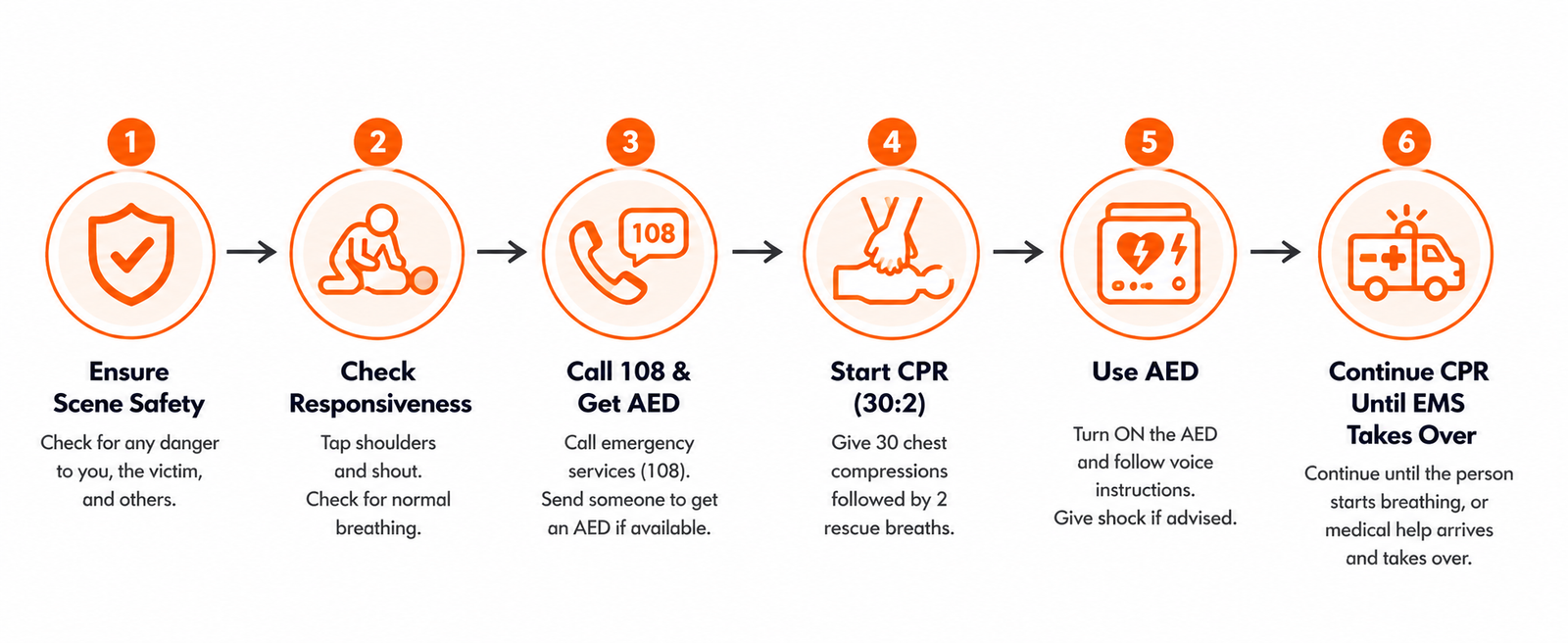
- Follow the correct CPR Steps
- Maintain compression quality
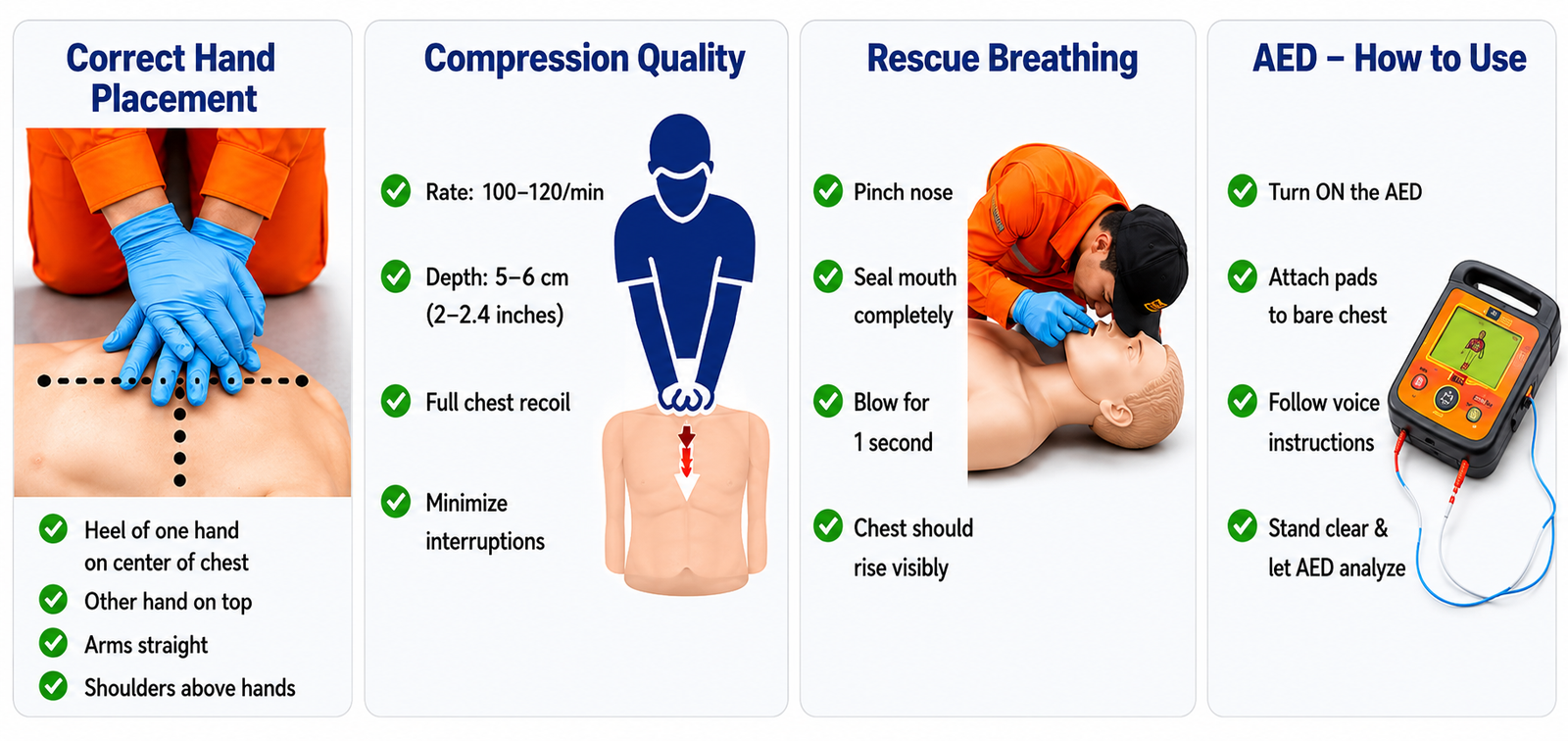
- Push hard, push fast in the center of the chest
- Never give up until help arrives
- Use AED, if available
Common Mistakes
- Compression too slow
- Not pushing deep enough
- Leaning on the chest
- Stopping CPR too often
- Wait for professional to come
- Incorrect hand position
When to Stop CPR
- Person starts breathing
- Professional help takes over
- You are physically unable to continue
- Scene becomes unsafe
Possible Complications
- Rib fracture
- Soreness or Fatigue
- Internal Injuries (rare)
- Vomiting during CPR
- Lung injury (Pneumothorax) – Rare, caused by fractured ribs
- Sternum (breastbone) fracture
DO's
- Act Immediately
- Push hard and fast
- Use proper technique
- Keep going without delay
- Allow full chest recoil
- Use AED, if available
Don'ts
- Don't delay to act
- Don't check pulse for too long
- Don't give excessive breathing
- Don't stop CPR early
- Don't forget your own safety
- Don't stop until help arrives
Pro Tips
- Stay calm and confident
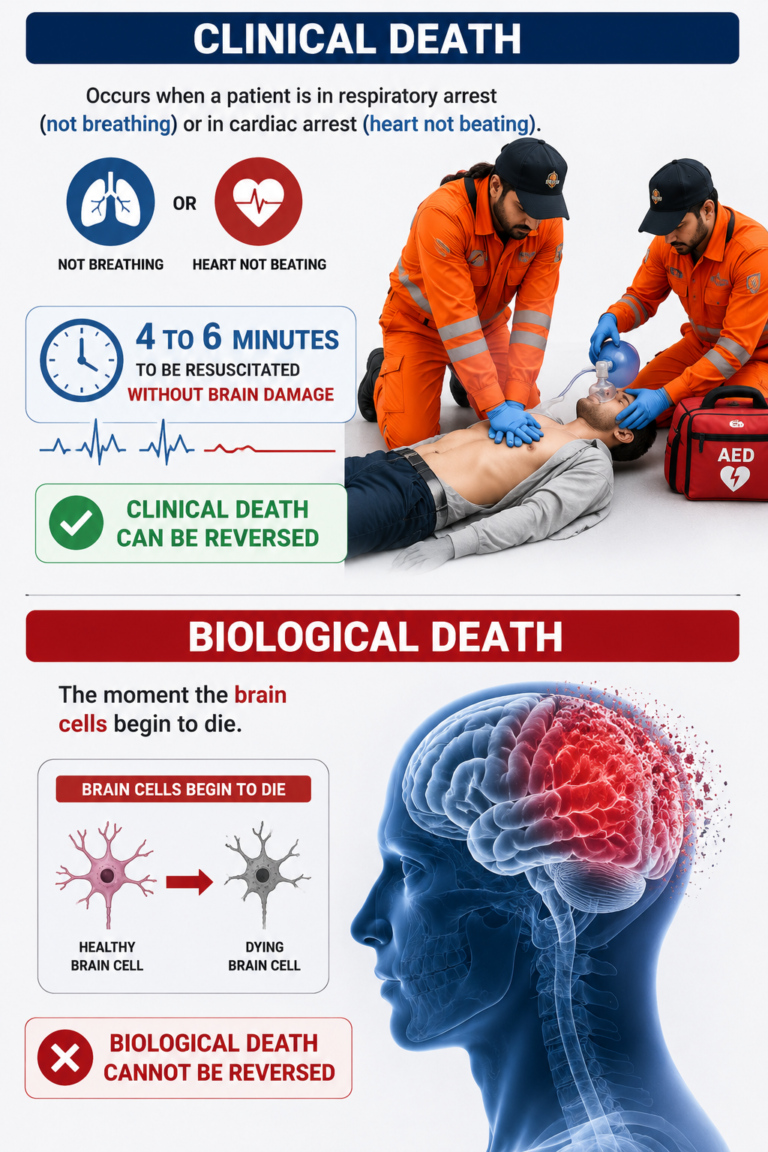
- Golden time - 4- 6 minutes
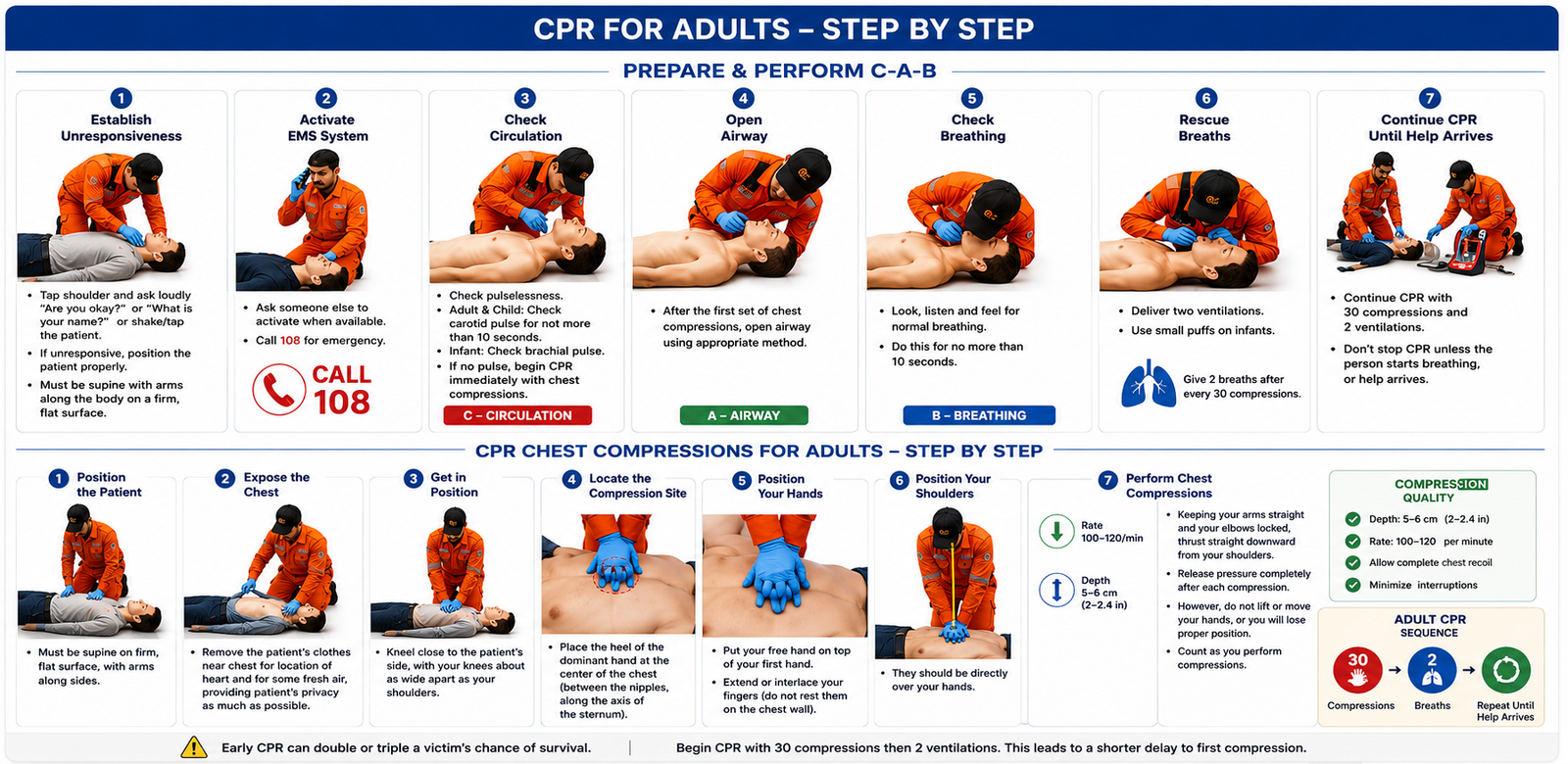
- Compression - 30 & Breathing - 02 (01 cycle)
- Lie the victim on Flat & Hard surface not on Sofa or Mattress.
- Aspirin helps in Blood Thinning.
- Sorbitrate tab relaxes & widens Blood vessels.
Related Articles
- Bleeding Control
- Burns & Scalds
- Fracture First Aid
- Soft tissue injury
- Choking Response
- PPE for First Responders
Frequently Asked Questions
What is CPR, and when should it be performed?
CPR (Cardiopulmonary Resuscitation) is an emergency life-saving technique used when a person’s heart has stopped beating or they are not breathing normally. It should be started immediately in cases of sudden cardiac arrest while waiting for emergency medical services.
What is the correct compression rate and depth for adult CPR?
For adults, perform chest compressions at a rate of 100–120 compressions per minute and a depth of 5–6 cm (2–2.5 inches). Allow the chest to fully recoil after each compression and minimize interruptions.
What is the CPR compression-to-breath ratio?
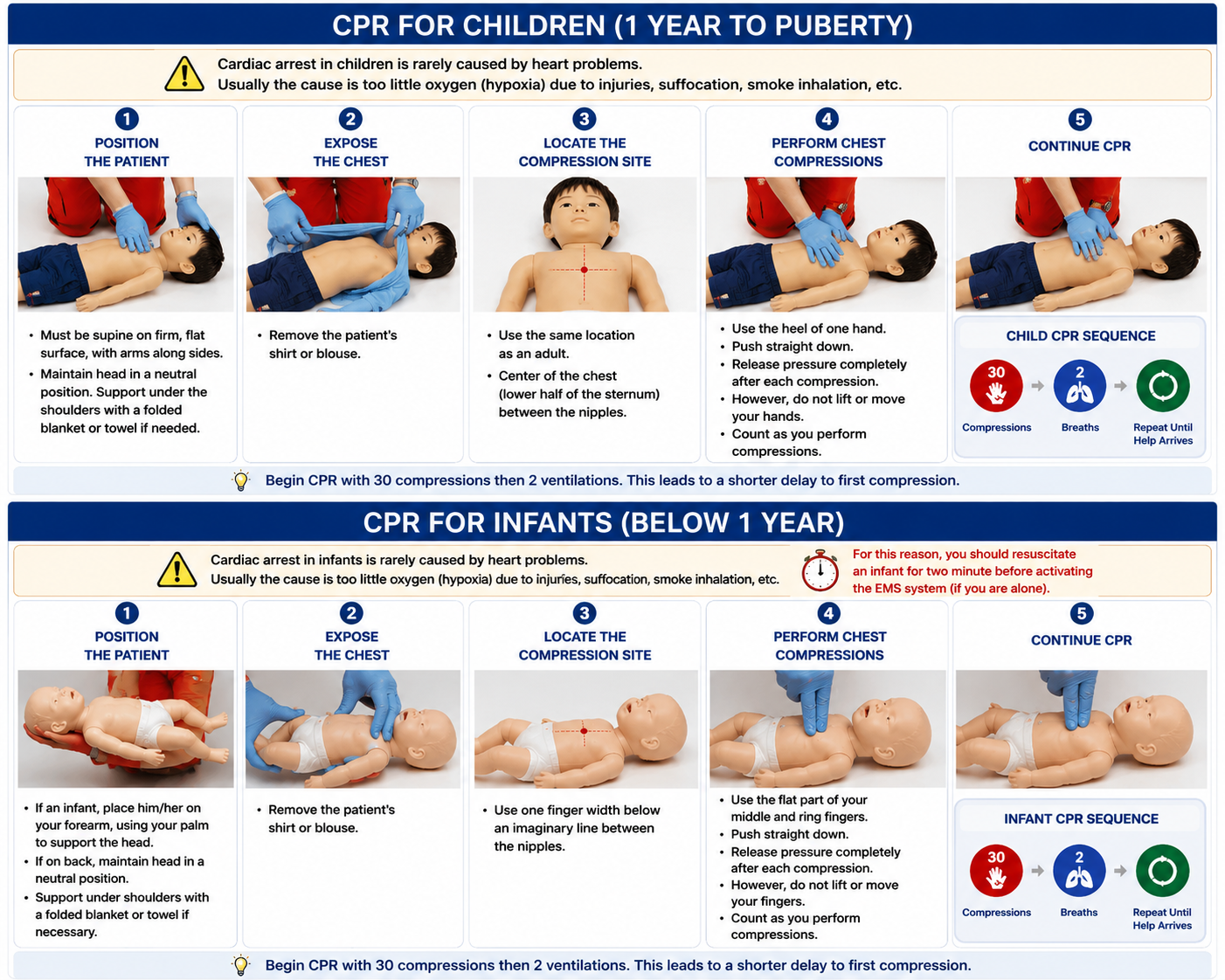
For a single rescuer, the recommended ratio is 30 chest compressions followed by 2 rescue breaths (30:2) for adults, children, and infants. Continue this cycle until the person recovers or professional help takes over.
Can CPR restart the heart?
No. CPR does not usually restart the heart. Its primary purpose is to maintain blood flow and oxygen delivery to the brain and other vital organs until an Automated External Defibrillator (AED) or advanced medical care can restore a normal heart rhythm.
What should I do if I am not trained in rescue breathing?
If you are untrained or unwilling to provide rescue breaths, perform Hands-Only CPR by giving continuous chest compressions at a rate of 100–120 per minute until emergency medical services arrive or an AED becomes available.
When should CPR be stopped?
CPR should only be stopped if:
- The person starts breathing normally or regains signs of life.
- A trained healthcare provider or EMS takes over.
- The scene becomes unsafe.
- You are physically unable to continue due to exhaustion.
PILLAR PAGE- CPR (CARDIOPULMONARY RESUSCITATION)
Learn how to recognize cardiac arrest and perform high-quality Cardiopulmonary Resuscitation (CPR) using the latest Medical First Response (MFR) principles. Master the complete CPR sequence, chest compressions, rescue breaths, AED use, and life-saving techniques for adults, children, and infants.

Disclaimer
This content is for educational purposes only and does not replace professional medical training or advice. In real emergencies, always follow guidelines of qualified medical professionals.