
Category- First Aid
Reading Time- 12 -15 Mins
Difficulty-Begginer
Last Updated-12/07/2026
QUICK NAVIGATION
What are Burns?
Causes & Classificationof Burns
Rule of Nines for Adults & Children
Signs & Symptoms
First Aid Treatment
Infection Prevention
Complications & When to Seek Help
Dos, Don'ts & Pro Tips
FAQs
Related Topics
What are Burns injuries?
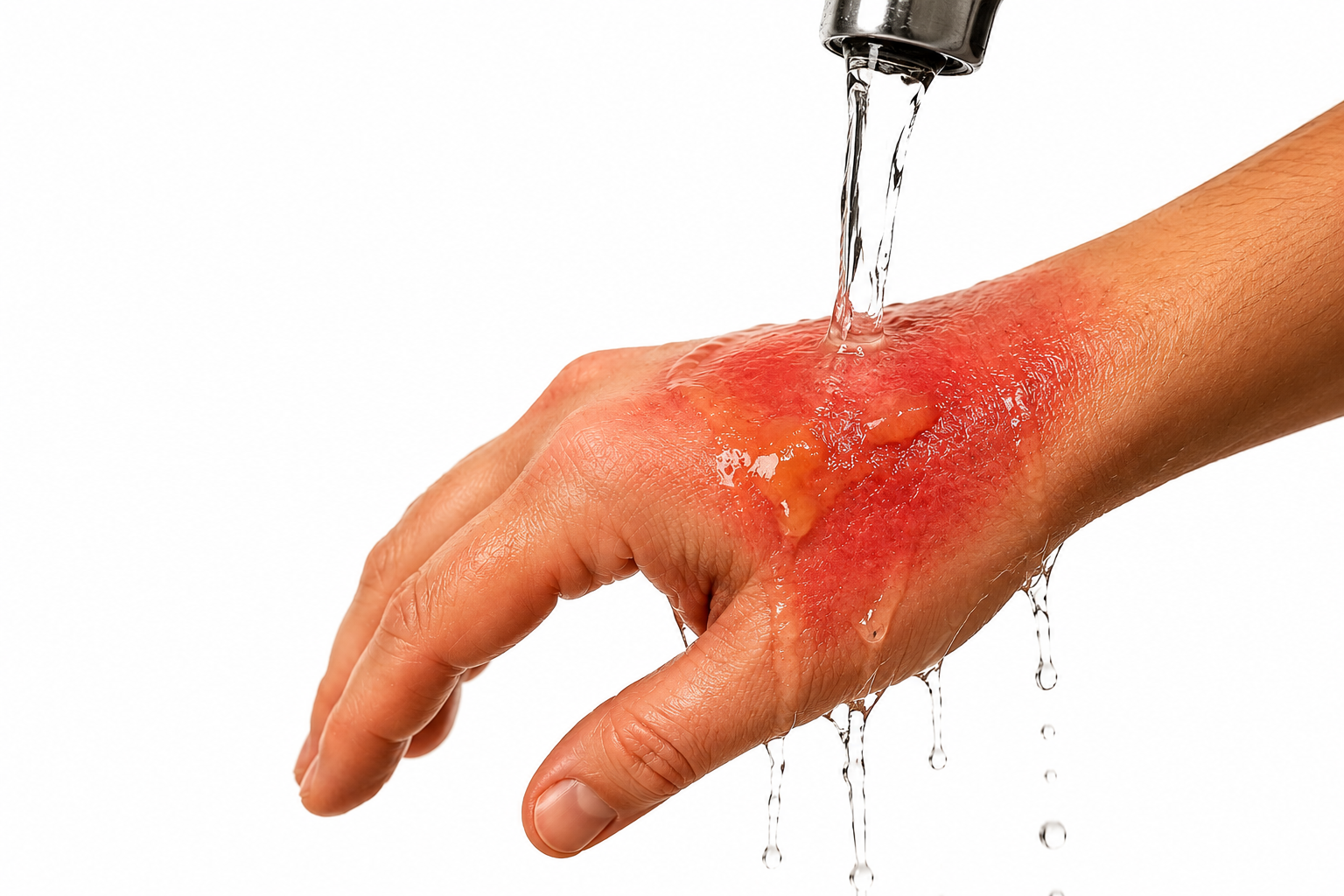
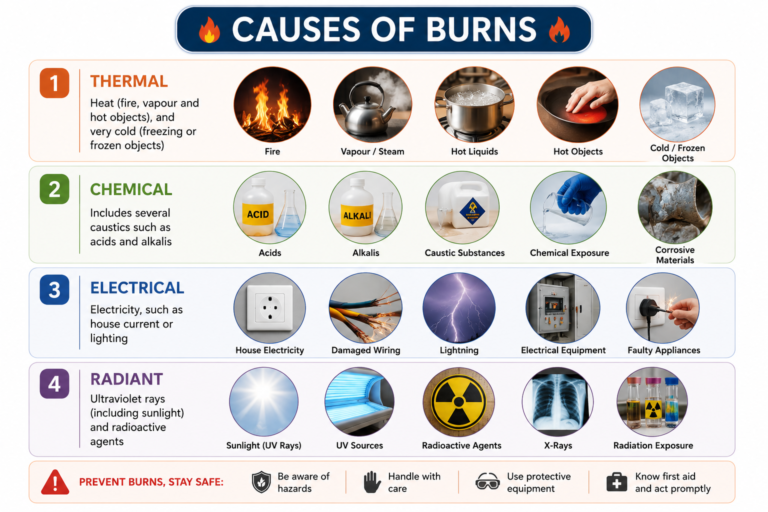
Injuries caused by exposure to excessive heat from thermal, chemical, electrical or radiation. Burns can injure the skin, muscles, blood vessels, nerves and bones. The eyes, ears and the respiratory system can also be affected. Apart from the physical damage, the victim suffers psychologically and emotionally.
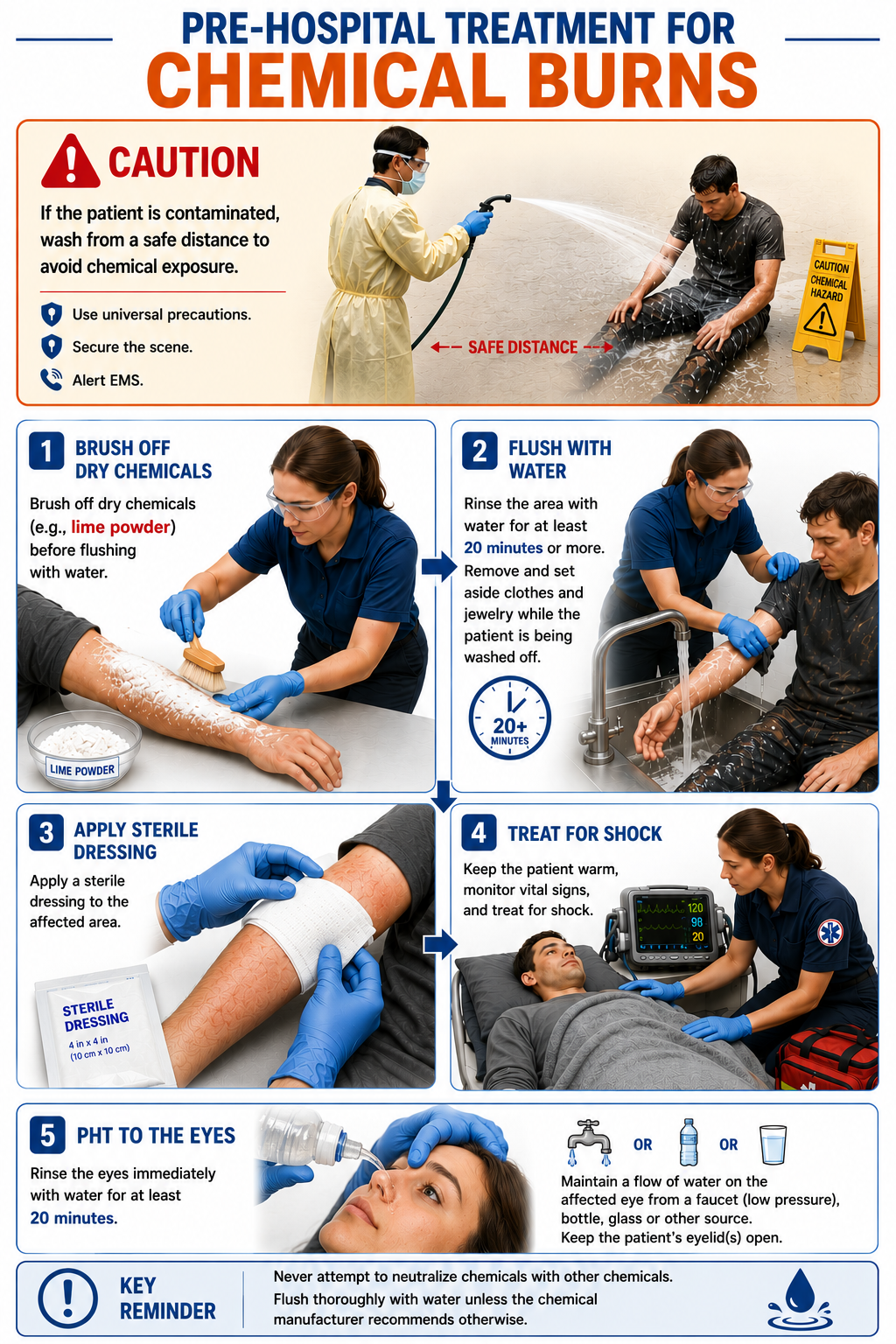
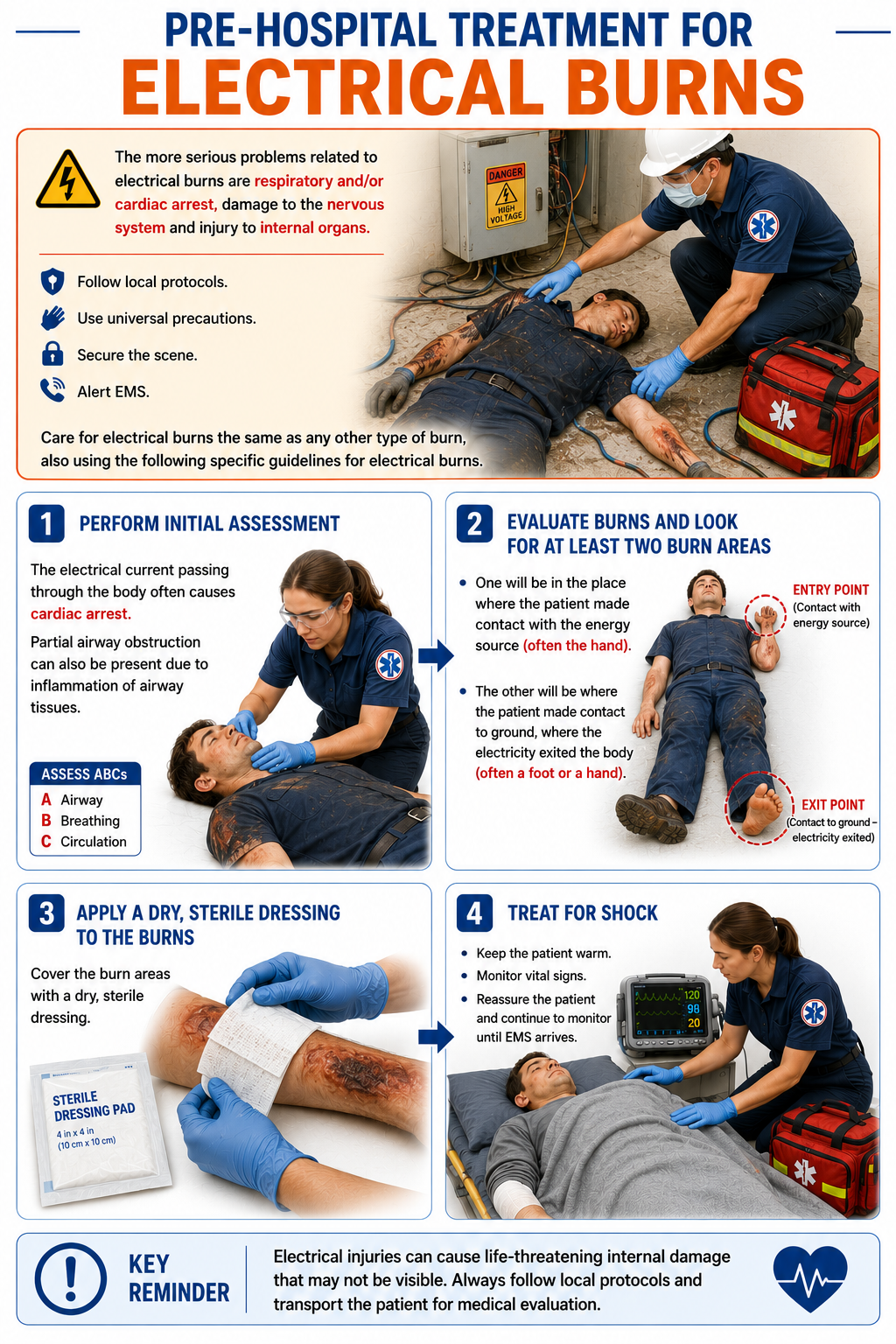
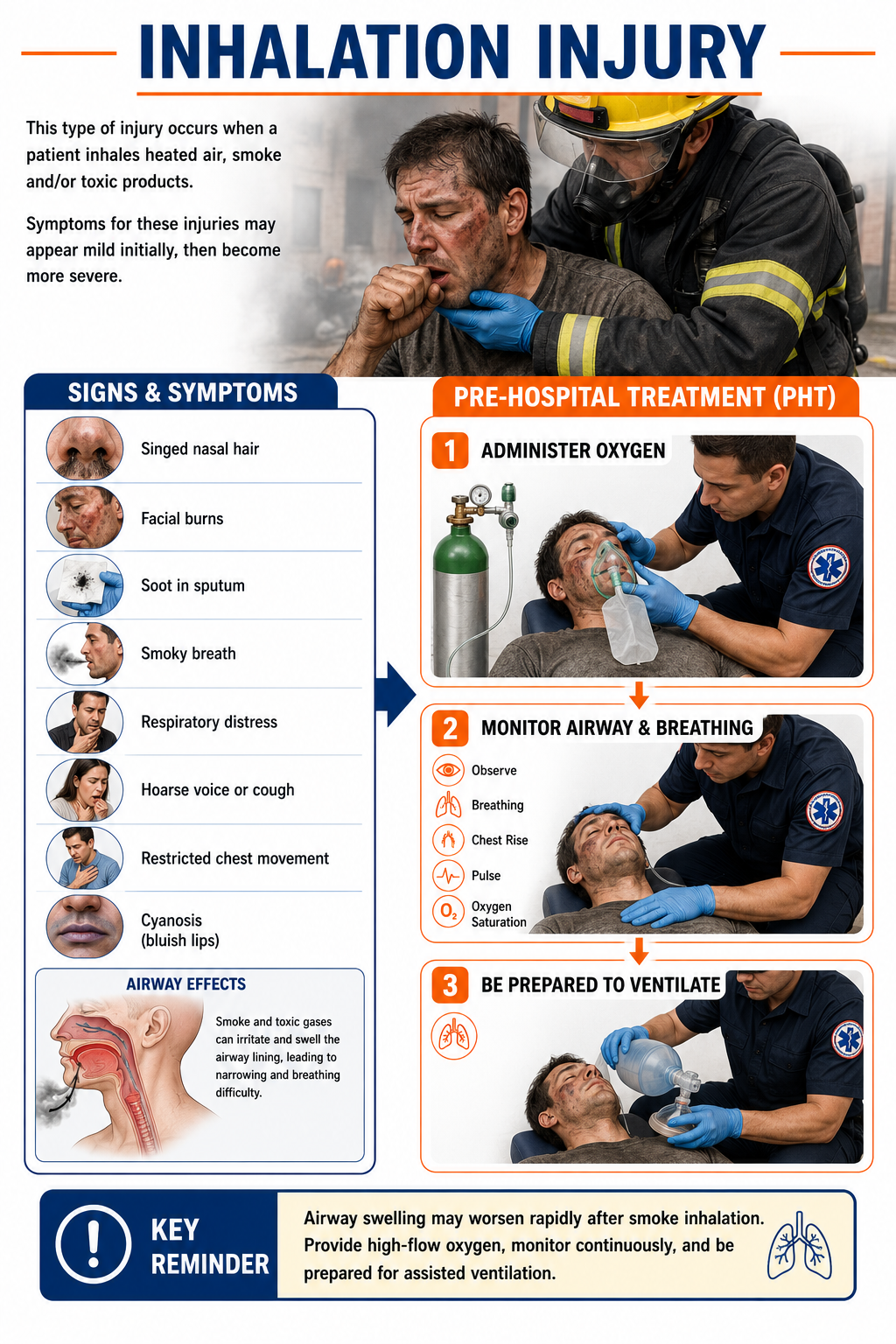
Key Takaways
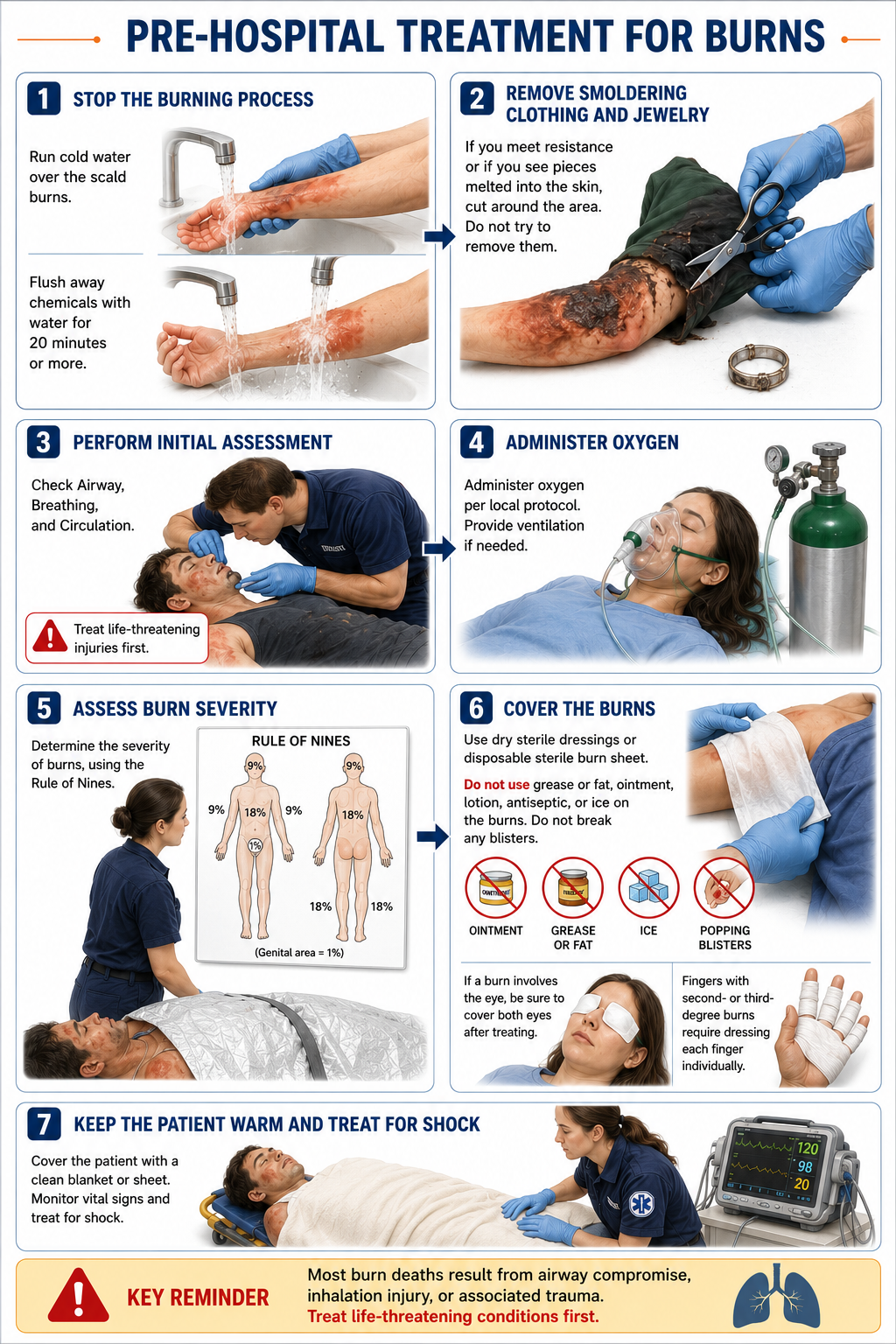
- Cool burns with cool running water for at least 20 minutes
- Never apply ice, butter, toothpaste, or home remedies
- Cover the burn with a clean, sterile, non-stick dressing
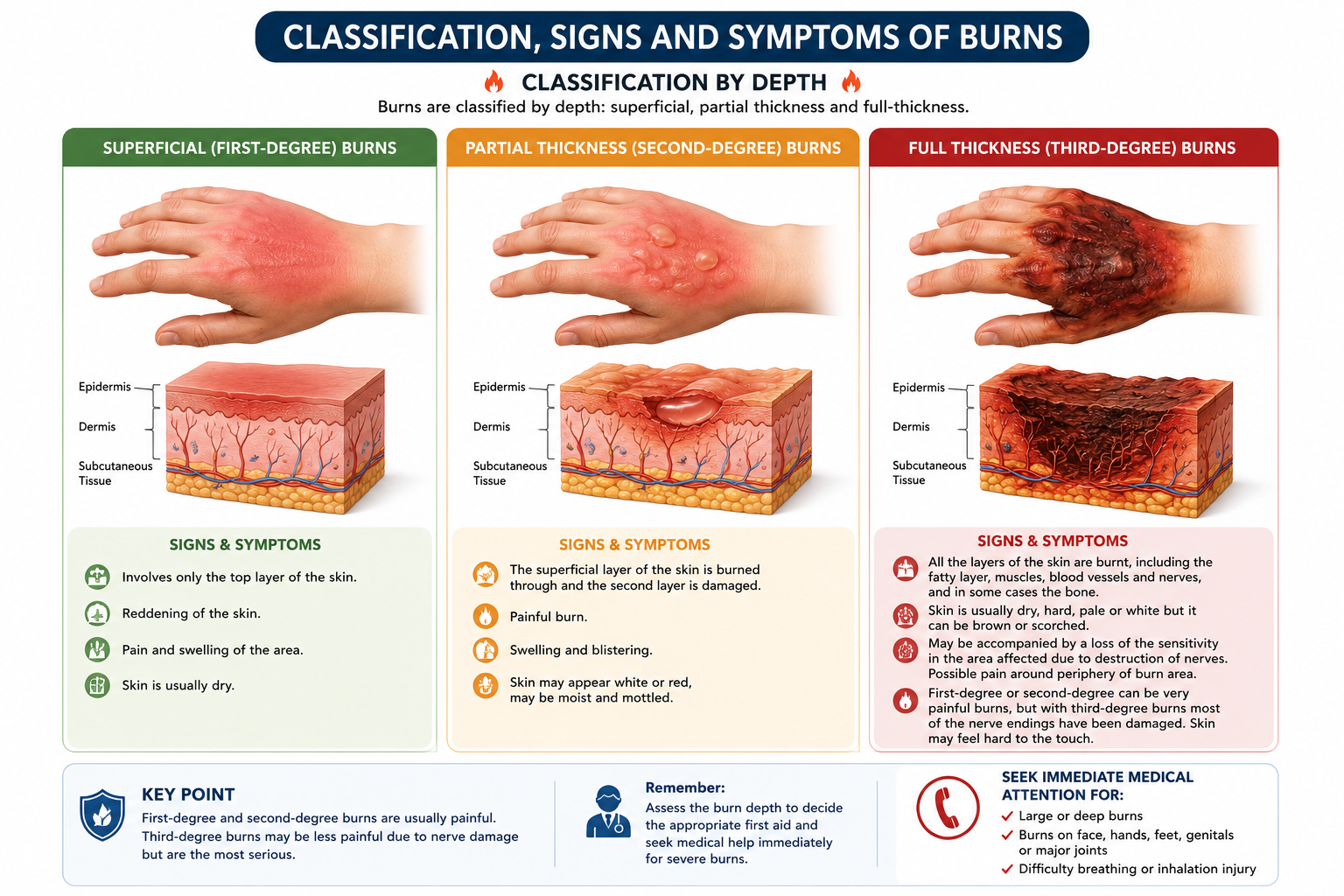
- Seek emergency care for deep, large, chemical, electrical, or facial burns
- Watch closely for infection, shock, and breathing difficulties
- Early first aid can reduce pain, prevent complications and improve healing
Infection Prevention
- Wash Hands before wound care
- Use clean, sterile dressings only
- Change dressing as advised
- Avoid touching the burn unnecessarily
- Keep wound clean and dry
- Watch daily for infection signs
When to seek emergency
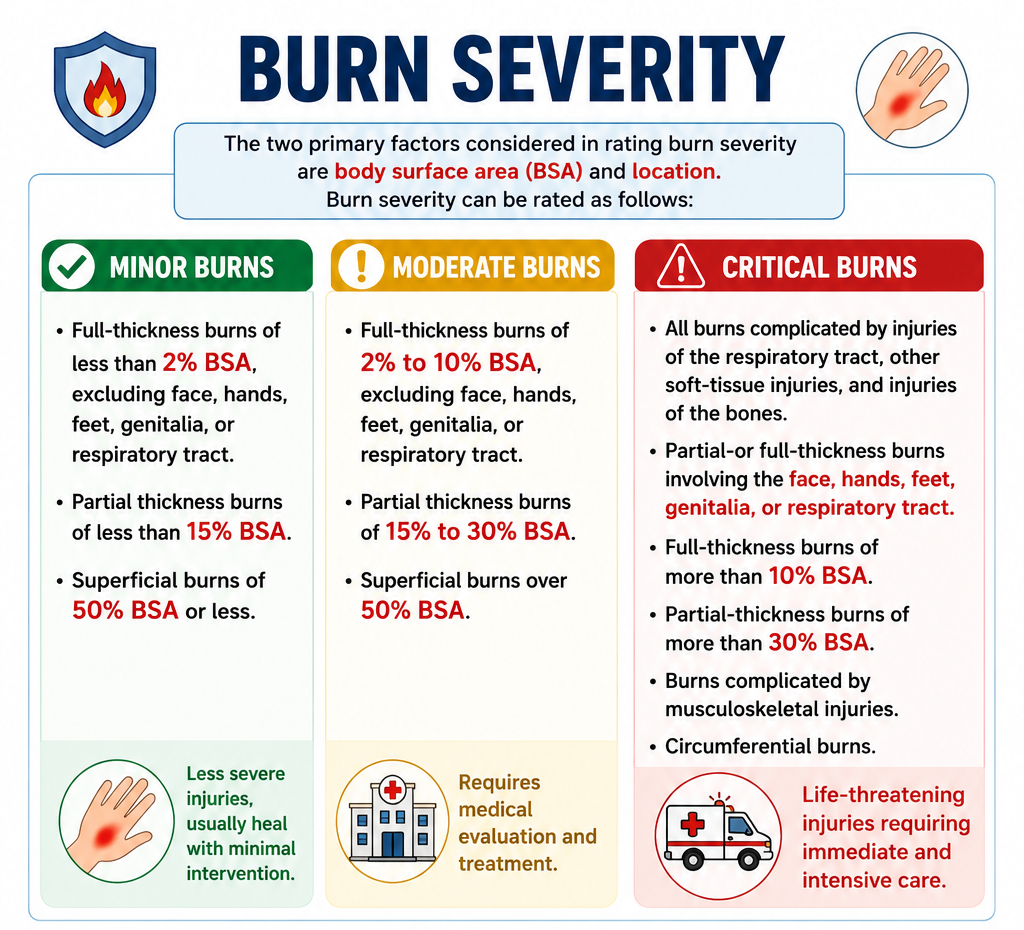
- Burn larger than your palm
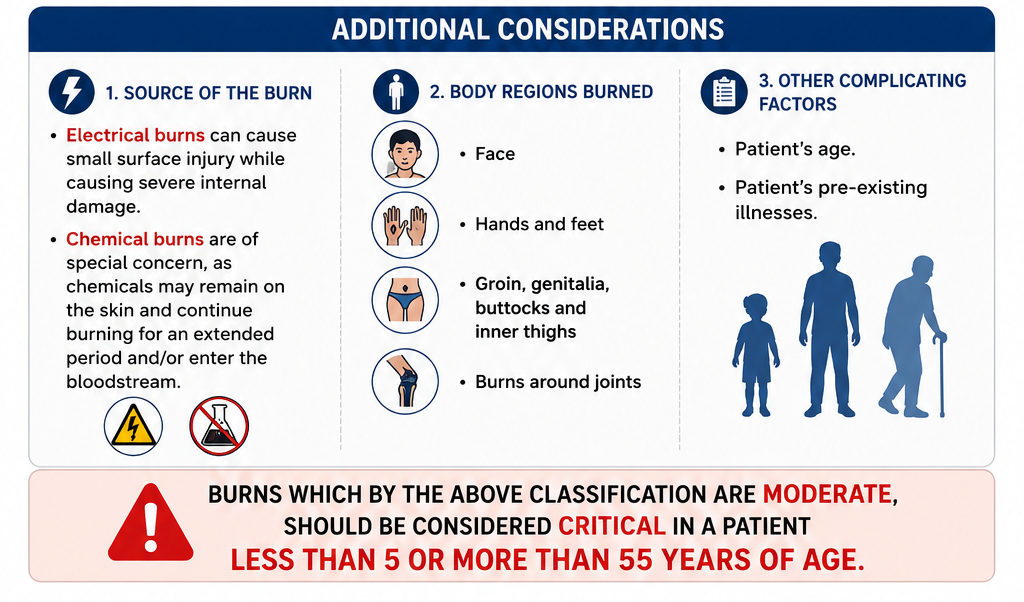
- Face, hands, feet, or genitals burned
- Deep, white, or charred burns
- Chemical or electrical burns
- Difficulty in breathing or smoke inhalation
- Fever, pus, or increasing redness
Possible Complications
- Wound infection or sepsis
- Severe dehydration and shock
- Permanent scarring or contractures
- Loss of movement or function
- Breathing problems from smoke
- Hypothermia in extensive burns
DO's
- Cool burn with running water
- Remove tight jewelry early
- Cover with sterile non-sticky dressing
- Keep patient hydrated
- Elevate burned limbs if possible
- Monitor for signs of shock
Don'ts
- Don't apply ice directly
- Don't burst burn blisters
- Don't use toothpaste or butter
- Don't peel off stuck clothing
- Don't touch burns with dirty hands
- Don't delay medical evaluation
Pro Tips
- Cool the burn for 20 minutes
- Remove rings before swelling begins
- Keep the patient warm overall
- Assess airway after fire exposure
- Tetanus vaccination may be required
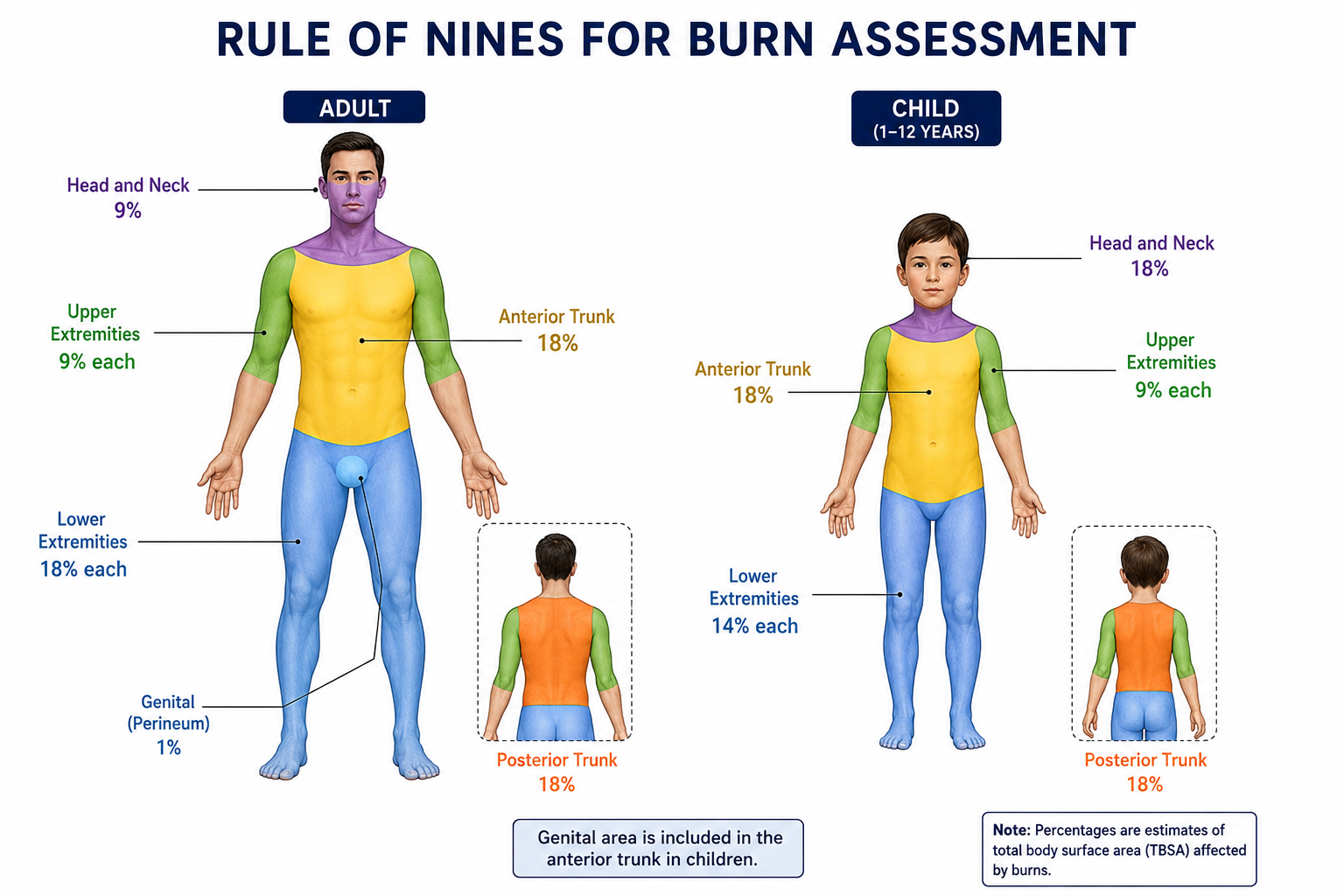
- Burn size guides treatment urgency
Related Articles
- Bleeding Control
- CPR
- Fracture First Aid
- Soft tissue injury
- Choking Response
- PPE for First Responders

Frequently Asked Questions
What is the difference between a burn and a scald?
Burns are caused by dry heat, such as flames, hot metal, or electricity. Scalds are caused by hot liquids or steam. Both can damage the skin and require similar first aid.
What is the first thing I should do after a burn?
Cool the burned area under cool running water for at least 20 minutes, remove tight jewelry or clothing if not stuck to the skin, and cover the burn with a clean, non-stick dressing.
Should I use ice on a burn?
No. Ice or ice-cold water can damage the skin further and worsen the injury. Use cool running water instead.
Can I apply toothpaste, butter, oil, or home remedies?
No. These substances trap heat, increase infection risk, and may delay healing. Use only recommended first-aid measures.
Should I pop burn blisters?
No. Blisters protect the underlying skin from infection. They should only be treated by a healthcare professional if necessary.
When should I seek emergency medical care?
Seek immediate medical help if the burn is deep, larger than the person’s palm, involves the face, hands, feet, genitals, major joints, or is caused by chemicals, electricity, or smoke inhalation.
PILLAR PAGE- BURNS & SCALDS
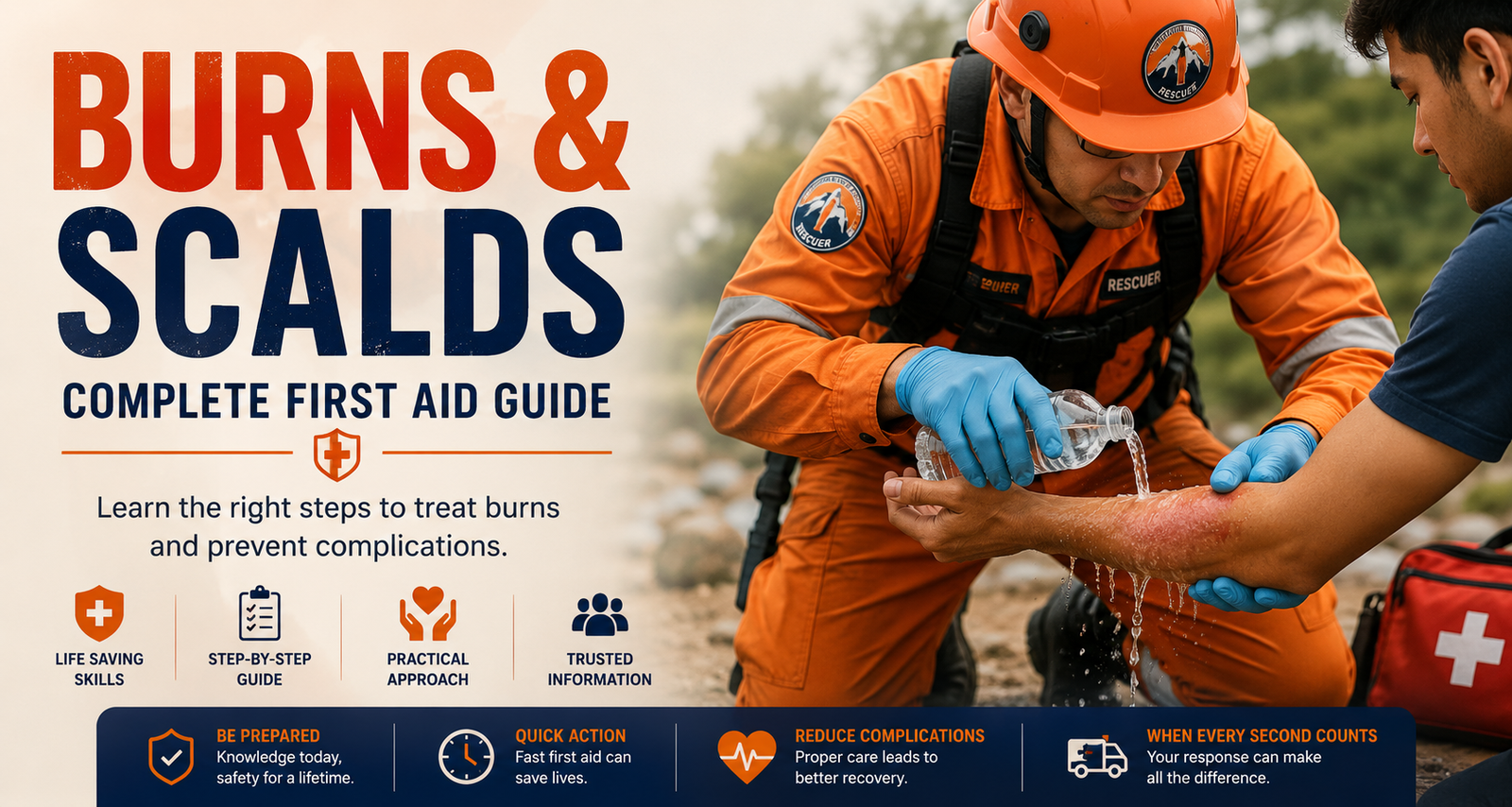
Master essential burn and scald first aid with clear, step-by-step guidance to manage injuries safely until professional medical care is available. Learn how to recognize burn severity, provide immediate treatment, prevent complications and know when emergency care is required.

Disclaimer
This content is for educational purposes only and does not replace professional medical training or advice. In real emergencies, always follow guidelines of qualified medical professionals.